International Relations
01
International RelationsHouthi Escalation and the Attack on Riyadh Airport
Why in news?
- A missile struck a passenger terminal at King Khalid International Airport in Riyadh on October 10, killing 12 people and injuring 309. An injured Indian citizen later died, raising the toll to 13.
- Another projectile struck the airport the next day, marking a sharp escalation in Houthi attacks on Saudi Arabia and disrupting civilian aviation.
Who are the Houthis?
- The Houthis, formally known as Ansar Allah, emerged from the Zaydi Shia community of northern Yemen.
- They seized Sanaa in 2014 and displaced the internationally recognised government.
- A Saudi-led coalition intervened in 2015 to restore the government, turning the conflict into a wider regional confrontation involving Saudi Arabia and Iran.
Strategic geography
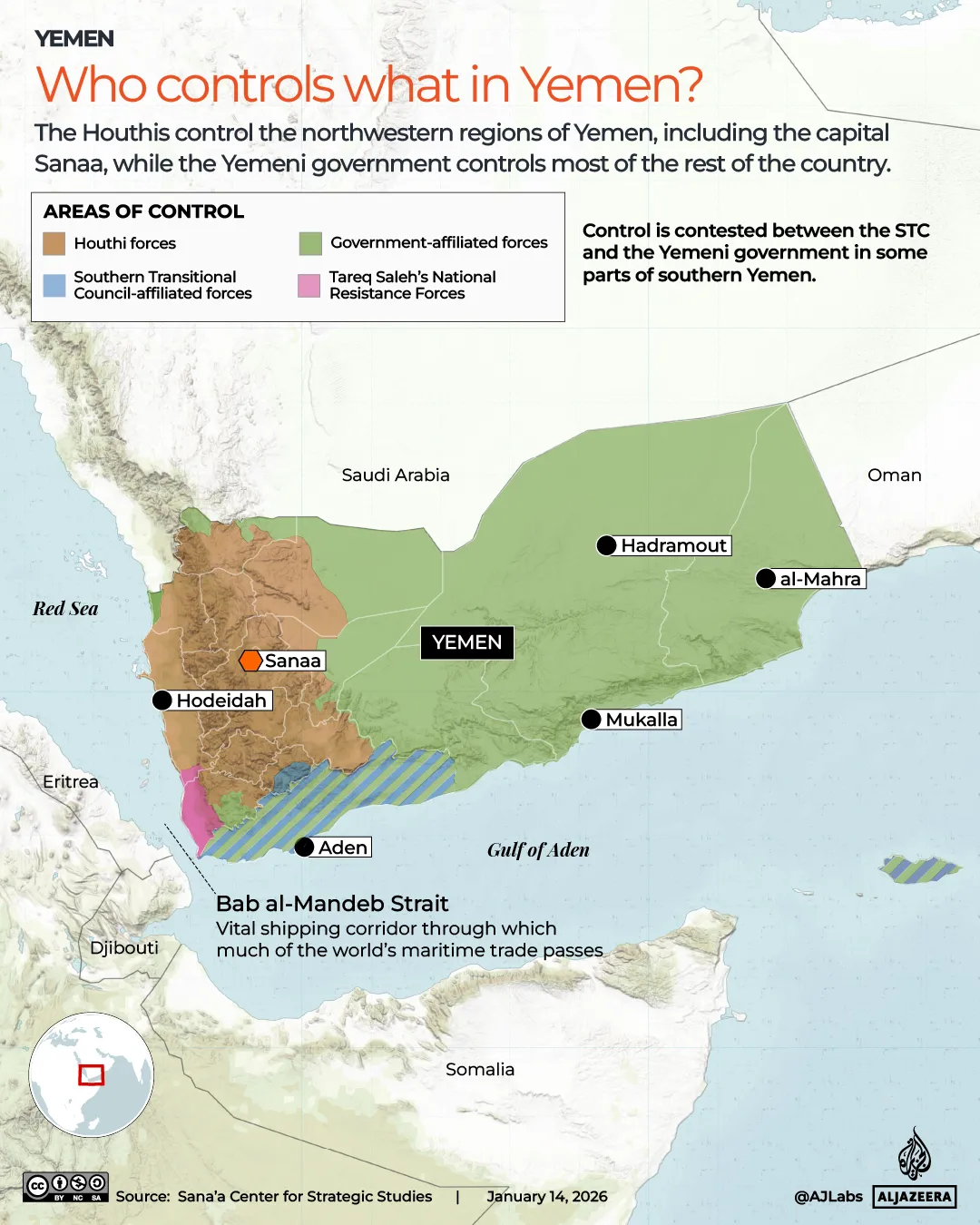
- Houthi-held territory includes much of northwestern Yemen and the Red Sea coast around Hodeidah.
- Yemen overlooks the Bab-el-Mandeb Strait, which connects the Red Sea with the Gulf of Aden and carries major Asia–Europe shipping routes.
- Missile and drone attacks can therefore affect civilian aviation, Gulf security, Red Sea shipping and global supply chains.
Why the escalation matters
- Direct attacks on passenger infrastructure raise serious concerns under international humanitarian law.
- Retaliation could reopen a major Saudi–Houthi front and weaken efforts towards a negotiated settlement in Yemen.
- The conflict can widen through external military support, maritime attacks and disruption of energy and trade routes.
Why it matters
Escalation in Yemen can threaten civilian life, Gulf stability and the maritime corridor linking the Indian Ocean with the Mediterranean.