Civil Services Prep

Weekly digest

UPSC current affairs, 17-23 Aug, 2026

64 entries, published 21 August 2026.

Monday, 17 Aug

Polity

01

Census 2027: new questions, confidentiality and self-enumeration

Polity

Brief history of the Census in India

  • Population enumeration has ancient precedents in India. Kautilya’s Arthashastra recommended collecting population information for administration and taxation. The Ain-i-Akbari also recorded demographic and economic information for Mughal administration.
  • These were administrative counts, not modern censuses conducted simultaneously under a uniform methodology.
  • 1872: India’s first countrywide census exercise was attempted under British rule. It was conducted at different times in different regions and did not cover the entire country.
  • 1881: The first complete and synchronous Census was conducted using a broadly uniform schedule.
  • A Census was subsequently conducted every ten years from 1881 to 2011, including during the Second World War.
  • 1948: Parliament enacted the Census Act, providing the legal basis for census operations and the duties of census officials.
  • 1951: The first Census of independent India was conducted.
  • 2011: This was the fifteenth Census in the continuous series beginning in 1872 and the seventh after Independence.
  • The Census due in 2021 was postponed, making Census 2027 the first enumeration after a much longer-than-normal interval. Census of India history

What is new in Census 2027?

The Population Enumeration questionnaire contains 40 questions, compared with 29 in Census 2011. New fields include:

  • Digital literacy;
  • Permanent address;
  • Nationality;
  • Details of parents and spouse;
  • Place of COVID-19 vaccination;
  • Number of bank accounts held; and
  • Aadhaar, voter ID, passport, driving licence and mobile numbers, when available.

The Census will not collect bank-account numbers, balances or transaction histories.

Institutional framework

  • Census is listed in the Union List.
  • It is conducted under the Census Act, 1948.
  • The responsible authority is the Office of the Registrar General and Census Commissioner under the Ministry of Home Affairs.
  • Individual census records are confidential and are used to prepare aggregated statistics.
  • Census data are distinct from the National Population Register and electoral rolls.

Self-enumeration

  • Households can submit their information through the designated online portal.
  • Enumerators will carry QR-enabled identity cards whose credentials can be verified.
  • Self-enumeration can reduce the workload of field enumerators and improve convenience.
  • It also creates risks of impersonation, phishing, digital exclusion and incorrect self-reporting.

Special arrangements for difficult areas

  • Population Enumeration is beginning early in snow-bound parts of Ladakh, Jammu and Kashmir, Himachal Pradesh and Uttarakhand.
  • Nomadic communities such as Gujjar-Bakarwals require route mapping and coordination with local departments to prevent undercounting.
  • Census 2027 will provide the first comprehensive demographic picture of Jammu and Kashmir and Ladakh after their reorganisation into Union Territories.
Why it matters

Census data influence welfare planning, fiscal allocation, delimitation, reservation of legislative seats for women and the measurement of migration, employment, education and social composition.
Polity

02

Delimitation after 2026: representation versus federal balance

Polity

Source: The Hindu

Delimitation is the process of determining the number and territorial boundaries of Lok Sabha and State Assembly constituencies. It seeks to ensure broadly equal representation by keeping the population represented by each seat reasonably comparable.

Parliament determines the legal framework, while a Delimitation Commission conducts the exercise. The principal constitutional provisions are:

  • Article 82: readjustment of Lok Sabha seats and constituencies after a Census.
  • Article 170: corresponding readjustment for State Legislative Assemblies.
  • Article 81: governs the composition of the Lok Sabha and the relationship between population and representation.

The present allocation of Lok Sabha seats among States is substantially based on the 1971 population. It was frozen to ensure that States which successfully reduced population growth were not penalised through a loss of relative political representation. The freeze was first introduced through the 42nd Constitutional Amendment and later extended by the 84th Amendment until figures from the first Census conducted after 2026 become available.

This creates two competing principles:

  • Democratic equality: constituencies with very different populations weaken the idea of one person, one vote, one value.
  • Federal fairness: population-based redistribution could substantially increase the influence of faster-growing States while reducing the relative voice of States that performed better in education, health and population stabilisation.

Increasing the total size of the Lok Sabha without changing States’ existing proportions is one possible compromise. But a much larger Lok Sabha could affect parliamentary deliberation, infrastructure and the numerical relationship between the Lok Sabha and Rajya Sabha. Delimitation is also linked to the implementation of women’s reservation under the 106th Constitutional Amendment.

Why it matters

The issue is not merely about drawing boundaries. It will determine how India balances population-based representation, State equality, women’s political representation and the federal distribution of power.

Environment

03

Hexavalent chromium contamination of groundwater

Environment

Source: The Hindu

Groundwater in parts of Kanpur Nagar, Kanpur Dehat and Fatehpur in Uttar Pradesh has turned yellow-green because of contamination by hexavalent chromium, or chromium(VI). The contamination has been linked to decades of improperly stored or dumped industrial waste associated with chemical and leather-processing industries.

Chromium exists in several oxidation states:

  • Chromium(III) is comparatively stable and occurs naturally in rocks and soil.
  • Chromium(VI) is highly reactive, mobile in water and toxic. Its compounds are used in processes such as electroplating, pigment production and wood preservation.
  • Inhaled chromium(VI) compounds are classified as carcinogenic. Exposure may also damage the skin, respiratory system, liver and gastrointestinal tract.

The problem illustrates how contaminated soil becomes a continuing source of groundwater pollution. Rainwater can dissolve pollutants from an unsecured waste dump and carry them down through soil into an aquifer. Once an aquifer is affected, natural flushing may take decades or even centuries, depending on groundwater movement, geology and the quantity of pollutant.

Possible responses include:

  • Removing or securely containing the original waste;
  • Mapping the contaminated plume;
  • Preventing the use of shallow hand pumps;
  • Providing reliable piped drinking water;
  • Treating water through chemical reduction, adsorption or membrane-based methods;
  • Monitoring blood, soil and groundwater; and
  • Applying the polluter-pays and precautionary principles.

The National Green Tribunal has repeatedly intervened in the affected areas, including ordering the removal of large chromium dumps.

Why it matters

Groundwater contamination is often invisible until it becomes severe. The case connects industrial regulation, environmental health, aquifer remediation, safe drinking water and accountability for legacy pollution.

Environment

04

India’s first guide to Open Natural Ecosystems

Environment

Source: PIB

India launched its first guide to Grasslands and Other Open Natural Ecosystems, or ONEs, at UNCCD COP17 in Ulaanbaatar. ONEs include grasslands, savannas, scrublands, deserts, rocky plateaus, ravines and certain coastal landscapes. PIB’s release

These landscapes have often been classified as “wastelands” because they lack dense tree cover. That description is ecologically misleading. Many are ancient, naturally open ecosystems rather than degraded forests awaiting afforestation.

Their importance includes:

  • Habitat for specialised species such as the Great Indian Bustard, blackbuck and grassland-dependent birds;
  • Grazing and livelihood support for pastoral communities;
  • Carbon storage, particularly in soil and root systems;
  • Groundwater recharge, nutrient cycling and erosion control;
  • Maintenance of ecological processes involving seasonal grazing and fire.

India’s ONEs range from Himalayan and Terai grasslands to the Thar Desert, Banni grasslands, Deccan savannas and coastal ecosystems. The guide also covers pastoralism, fire ecology and carbon sequestration.

A central conservation challenge is inappropriate tree planting. Planting trees in a native grassland can change its light, water and fire regimes, displace grassland species and reduce grazing access. Restoration must therefore begin by identifying the ecosystem that naturally belongs at a location—not by treating tree cover as the only measure of ecological health.

The guide is connected with India’s commitments under the United Nations Convention to Combat Desertification, including Land Degradation Neutrality: ensuring that gains from land restoration balance continuing degradation.

Why it matters

Conservation policy has historically privileged forests. Recognising ONEs can improve land classification, prevent damaging afforestation and give pastoral livelihoods and grassland biodiversity a clearer place in policy.

Environment

05

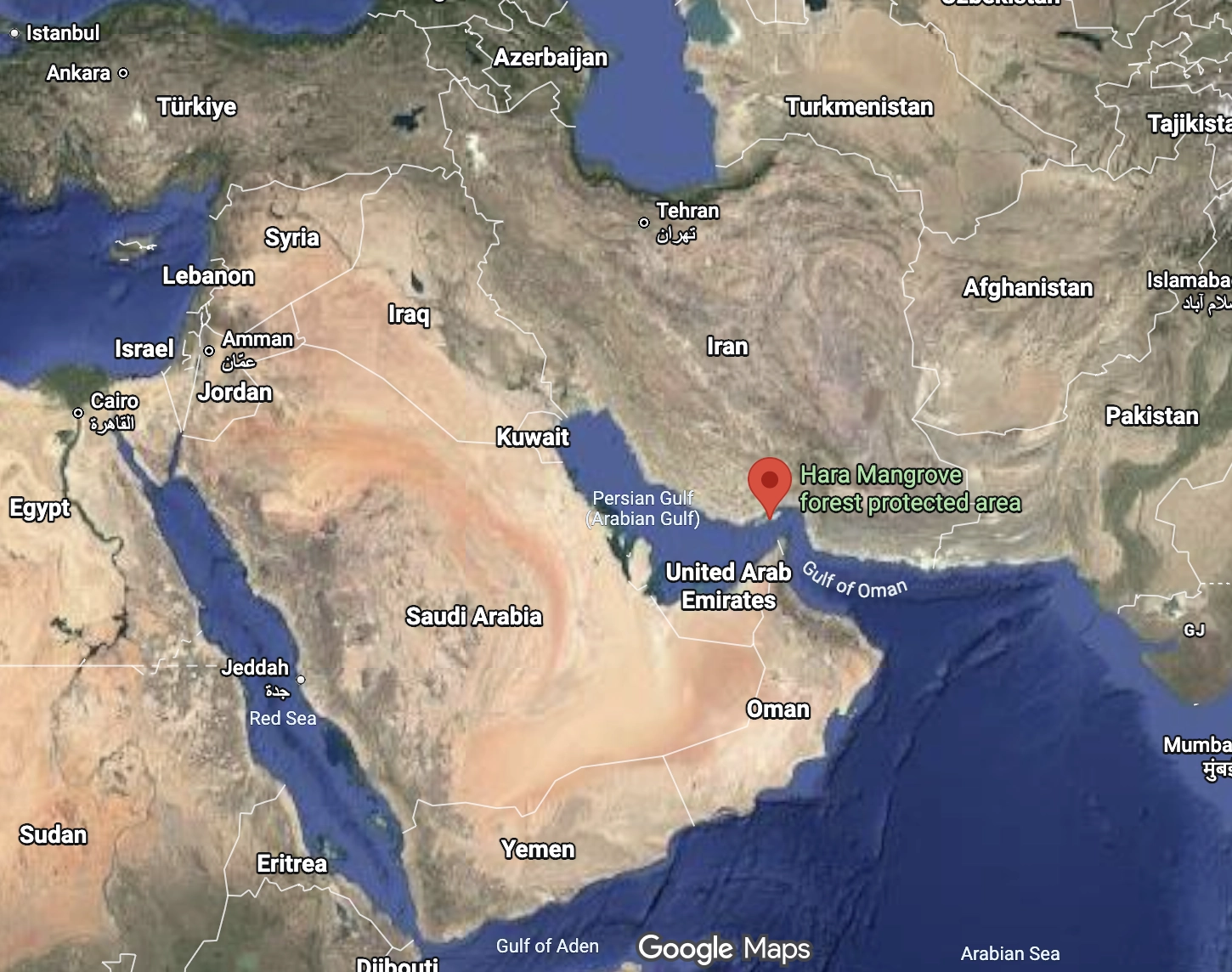
Hara mangroves of the Persian Gulf

Environment
Hara Mangrove forest protected area
Source: The Hindu

The Hara forests are mangrove ecosystems around Iran’s Qeshm Island and the Strait of Hormuz. They consist mainly of the grey mangrove, Avicennia marina, a salt-tolerant species found across tropical and subtropical coastlines.

Mangroves survive conditions that would kill most terrestrial plants through several adaptations:

  • Roots restrict the entry of some salt, while leaves can excrete accumulated salts.
  • Aerial roots called pneumatophores help obtain oxygen from waterlogged, oxygen-poor mud.
  • Dense root networks trap sediment and reduce coastal erosion.
  • Seeds may begin germinating while still attached to the parent plant, improving survival in tidal environments.

The Hara forests act as nurseries for fish, shrimp and crabs. They support migratory birds, local fisheries and nature-based tourism. Mangroves also store substantial quantities of blue carbon in biomass and waterlogged sediments.

Their position near the Strait of Hormuz makes them unusually vulnerable to oil spills and maritime conflict. Heavy fuel oil can coat aerial roots, obstruct gas exchange, contaminate sediment and enter marine food chains. Cleanup is difficult because heavy machinery and aggressive chemical dispersants can themselves damage fragile intertidal habitats.

The Strait of Hormuz connects the Persian Gulf with the Gulf of Oman and Arabian Sea. It is one of the world’s most important energy chokepoints, making ecological risks in the region inseparable from geopolitics and shipping security.

Why it matters

Hara forests combine three valuable prelims themes—mangrove adaptations, a UNESCO-recognised island landscape and the location of a strategic maritime chokepoint.

Tuesday, 18 Aug

Polity

01

Kerala is now officially "Keralam"

Polity
  • President Droupadi Murmu gave assent to the Kerala (Alteration of Name) Bill, 2026, after it passed both Houses of Parliament.
  • The Bill formally renames the state Keralam.
Background 2
  • Renaming a state needs a law passed by Parliament, not just a state assembly resolution, since state names and boundaries fall under Parliament's power.
  • Uttaranchal became Uttarakhand in 2007, and Orissa became Odisha in 2011, each through a similar Act followed by Presidential assent.
Why it matters

State renaming is a recurring Polity fact, worth knowing both the constitutional basis and the running list of states that have changed names.

Polity

02

Kerala's Chief Minister objects to a mining law amendment on federalism grounds

Polity
  • Kerala's Chief Minister wrote to the Prime Minister asking for a rethink of provisions in the Mines and Minerals (Development and Regulation) Amendment Bill, 2026.
  • His objection: the Bill curtails state governments' power to tax mineral-bearing land.
About the Bill 4
  • Section 9D restricts a State's power to impose any tax, cess, or other levy on mineral rights and mineral-bearing land, except within limits the Centre itself prescribes.
  • It brings mineral-bearing land more firmly under Union government regulation, and invalidates certain levies States had already imposed.
  • This follows a 2024 Supreme Court ruling, *Mineral Area Development Authority vs. Steel Authority of India*, where a nine-judge Bench held that States do hold an independent power to tax mineral rights, separate from the Union's power to regulate mining itself.
  • Kerala's objection, in short: this amendment claws back, through ordinary legislation, a taxing power the Supreme Court had just confirmed States possess.
Why it matters

Disputes over whether mineral taxation is a State or Union subject go back to long-running Centre-State legal battles, and are a standard entry point into questions on fiscal federalism.

Environment

03

A government audit finds India's flagship forest-restoration mission badly missed its targets

Environment
  • A Comptroller and Auditor General audit found the Green India Mission, running for a decade, had improved forest quality on only about 110,000 of its 1.4 million hectare target.
  • Forest cover expansion reached only about 4% of what the mission aimed for.
Background 5
  • The Green India Mission is one of eight pillars of the National Action Plan on Climate Change, launched in 2008.
  • It is the instrument through which India promised the Paris Agreement an additional carbon sink of 2.5 to 3 billion tonnes by 2030.
  • The audit found its intended convergence with other schemes, such as money collected under the Compensatory Afforestation Fund and rural work generated under MGNREGA's successor, never materialised.
  • The mission has since been overshadowed by a separate tree-planting drive, 'Ek Ped Maa Ke Naam', launched in 2024, which reports 140 crore saplings planted.
  • India's own State of Forest Report 2023 shows most recent green-cover gains are tree cover outside recorded forests, not restored forest itself.
Why it matters

A strong Mains example of the gap between a scheme's stated targets and its audited performance, and of the difference between planting trees and restoring a forest.

Government Schemes

04

Navy to lease two American surveillance drones

Government Schemes
  • India signed a ₹1,943-crore, 30-month contract with the US company General Atomics to lease two MQ-9B Sea Guardian drones for the Navy.
  • Purpose: improve maritime surveillance across the Indian Ocean Region.
Why it matters

Sits alongside India's broader defence-procurement and India-US defence relationship storyline, both regular Prelims and Mains themes.

International Relations

05

Myanmar confirms nearly 309,000 displaced Rohingya are in Bangladesh

International Relations
  • Myanmar's military government said close to 309,000 Rakhine-origin displaced persons are currently in camps in Bangladesh.
  • Their return depends on security conditions improving.
Why it matters

The Rohingya displacement crisis is a long-running International Relations topic, relevant to India's own refugee policy debates and regional stability in the Bay of Bengal neighbourhood.

Wednesday, 19 Aug

Polity

01

Census 2027 will ask about parents' religion and birthplace

Polity
  • The enumeration form for Census 2027 runs to 40 questions and is being piloted first in Ladakh and other snow-bound areas.
  • It asks for each person's Aadhaar number, and their parents' religion and place of birth.
  • On caste, the form does not offer a fixed list for those outside Scheduled Castes or Scheduled Tribes; instead it gives an open text field, plus options to answer "no caste" or decline to state one.
  • Opposition leaders have argued this falls short of a promised full caste count.
Background 3
  • India has held a census every ten years since 1881, one of the longest-running population count exercises in the world; earlier, non-synchronous counts go back to 1872.
  • The exercise runs under the Census Act, 1948, carried out by the Office of the Registrar General and Census Commissioner of India, under the Ministry of Home Affairs.
  • The last completed census was in 2011; the next one, ordinarily due in 2021, has been delayed and is only now under way.
Why it matters

Census methodology, and the difference between an enumeration and a full caste census, is a recurring Polity and governance topic.

International Relations

02

BRICS pushes back on the EU's carbon border tax

International Relations
  • At the 12th BRICS Environment Ministers' Meeting, held in New Delhi, member nations jointly criticised the EU's Carbon Border Adjustment Mechanism (CBAM) as a punitive and unilateral trade measure.
  • They also renewed a call, first agreed in 2025, for developed nations to triple climate adaptation finance by 2035.
  • Separately, India hosted the 8th BRICS Youth Energy Summit during its current BRICS presidency.
Background 4
  • BRICS began as an informal grouping of Brazil, Russia, India, and China, holding its first summit in 2009, with South Africa joining in 2010 to complete the original five.
  • It has since added more members and positions itself as a counterweight to Western-led forums such as the G7.
  • CBAM works somewhat like a tariff: importers of carbon-intensive goods such as steel, cement, aluminium, and fertiliser are charged for the carbon emitted in producing them abroad, matching the price EU-based producers already pay under Europe's own emissions trading system.
  • The EU argues this stops firms simply relocating polluting production outside Europe; countries including India argue it is a trade barrier wearing climate policy as cover.
Why it matters

CBAM's clash with developing-country trade interests, and India's BRICS presidency calendar, are both live International Relations and Environment themes.

Government Schemes

03

MGNREGA's replacement scheme shows a sharp fall in rural work generated

Government Schemes
  • A law replacing MGNREGA with a new scheme, the Viksit Bharat–Guarantee for Rozgar and Ajeevika Mission (Gramin), or VB-G RAM G, was passed in December 2025.
  • Roll-out was originally planned for April 2026, but the rules were not ready in time, so MGNREGA continued by default until VB-G RAM G finally took effect on 1 July 2026.
  • Rural work generated in the scheme's first full month, July 2026, came in more than 40% below what MGNREGA generated in July 2025, based on person-days of work recorded.
Key features of VB-G RAM G 6
  • Full name: Viksit Bharat–Guarantee for Rozgar and Ajeevika Mission (Gramin); it replaces MGNREGA outright rather than running alongside it.
  • The enabling Bill passed Parliament in December 2025; the switch from MGNREGA took legal effect on 1 July 2026, after an originally planned 1 April 2026 start date was missed.
  • Its Rules are, by the Ministry's own account, largely a rehash of the existing MGNREGA rules and orders rather than a fresh design.
  • Sets a new minimum wage norm of ₹300 a day, against MGNREGA's earlier norm of ₹100 a day at 2009-10 prices, though this is only a nominal rise once inflation since 2009-10 is accounted for.
  • Section 6 of the Act lets individual States suspend the scheme in parts of their territory, a provision some States invoked in July 2026.
  • Carries a 2026-27 Union Budget allocation of ₹95,692 crore, with States contributing roughly 40% of the total in most cases; combined Centre-State spending was expected to rise to about ₹1.5 lakh crore, close to 70% more than MGNREGA's 2025-26 spending.
Why it matters

MGNREGA has long been a Mains staple on rural livelihoods and the right to work; a live transition to a successor scheme, with an early stumble, is exactly the kind of governance-implementation story this subject rewards.

International Relations

04

IAEA finds undisclosed nuclear material at a Syrian site

International Relations
  • The IAEA's chief said inspectors located several tonnes of previously undisclosed nuclear material at a site in Syria, dating back to the former Assad government.
  • Syria itself reported the site to the IAEA on 17 July 2026.
  • The material is now being placed under international safeguards.
Background 4
  • The International Atomic Energy Agency is the United Nations' nuclear watchdog, headquartered in Vienna and established in 1957.
  • Its mandate covers two roles in some tension with each other: promoting the peaceful use of nuclear energy, and verifying, through inspections and safeguards agreements, that nuclear material and facilities are not diverted towards weapons use.
  • It reports to both the UN General Assembly and the Security Council, and its inspection work underpins the Nuclear Non-Proliferation Treaty.
  • The IAEA received the Nobel Peace Prize in 2005.
Why it matters

Nuclear non-proliferation and the IAEA's safeguards role are recurring International Relations topics, and this is a live example of how undeclared material gets brought under oversight.

Science & Technology

05

First spacewalk by a Frenchwoman, aboard the ISS

Science & Technology
  • French astronaut Sophie Adenot, working with American astronaut Anil Menon, carried out a spacewalk to replace a space-to-ground communication antenna on the International Space Station.
  • She becomes only the second European woman to complete a spacewalk, after Italy's Samantha Cristoforetti.
Why it matters

ISS operations and "firsts" in space exploration are common Prelims fact-based questions.

Thursday, 20 Aug

Polity

01

Census 2027: Disability Groups Flag Risk of Undercounting

Polity

Why in news

Disability-rights organisations have questioned the proposed disability classification for Census 2027. The Census reportedly proposes nine broad categories, while the Rights of Persons with Disabilities Act, 2016 recognises 21 specified disabilities.

The classification problem

The proposed Census categories cover:

  • Visual disability
  • Hearing disability
  • Speech disability
  • Locomotor disability
  • Intellectual disability
  • Mental illness
  • Acid-attack victims
  • Chronic neurological conditions
  • Blood disorders

However, several conditions recognised separately under the 2016 Act may not receive distinct identification. Examples include:

  • Autism spectrum disorder
  • Cerebral palsy
  • Muscular dystrophy
  • Multiple sclerosis
  • Dwarfism
  • Specific learning disabilities
  • Multiple disabilities

A person may still be counted within a broader category, but the exact disability could become invisible in the final data.

About the RPwD Act, 2016

  • It replaced the Persons with Disabilities Act, 1995.
  • It expanded the number of recognised disabilities from seven to 21.
  • A person with a benchmark disability generally has at least 40% of a specified disability, as certified by the competent authority.
  • The Act provides for non-discrimination, inclusive education, accessibility and reservation in specified circumstances.

Why disaggregated data matters

  • Different disabilities require different assistive devices and public services.
  • Autism support cannot be planned using only aggregate “intellectual disability” figures.
  • Muscular dystrophy and locomotor impairment may require different medical and rehabilitation responses.
  • Undercounting influences budget allocations, accessible infrastructure, special education and social-security coverage.
  • Broad categories also make it difficult to measure whether the protections under the 2016 Act are reaching each affected group.
Why it matters

A Census does more than count people. Its categories determine which social realities become visible to governments. Simplification may make enumeration easier, but excessive grouping can turn disability into a single administrative label and weaken evidence-based policymaking.

Science & Technology

02

Recovering Rare Earth Elements from Fly Ash and Red Mud

Science & Technology

Why in news

Pilot plants established in Odisha will attempt to recover rare earth elements and other useful materials from coal fly ash and bauxite residue. The projects are supported by NALCO and involve CSIR’s Institute of Minerals and Materials Technology.

What are the two wastes?

  • Fly ash: Fine residue left after burning pulverised coal in thermal power plants. It contains silica, alumina, iron compounds and small concentrations of strategically important elements.
  • Red mud: Highly alkaline, iron-rich residue produced during the extraction of alumina from bauxite through the Bayer process.
  • Both materials require extensive storage and can contaminate soil and water when improperly managed.

What will the pilot plants recover?

The fly-ash facility has a processing capacity of approximately 50 kg per day. Its proposed products include:

  • Alumina
  • Calcium silicate for ceramics
  • Quartz-rich residue for glassmaking
  • Iron hydroxide
  • Rare earth elements, including scandium

The red-mud project will explore the recovery of:

  • Ferro-titanium alloy
  • Metallic iron
  • Rare earth elements

Understanding rare earth elements

  • The group consists of the 15 lanthanides, along with scandium and yttrium.
  • They are not necessarily scarce in the Earth’s crust, but economically usable concentrations are uncommon.
  • Their similar chemical properties make separation difficult and energy-intensive.
  • They are used in permanent magnets, electric vehicles, wind turbines, electronics, lasers and defence equipment.

Advantages of secondary recovery

  • Reduces dependence on freshly mined ore.
  • Converts a disposal liability into an economic resource.
  • Lowers the volume of ash and red mud requiring storage.
  • Supports domestic supplies of strategically important minerals.
  • Encourages a circular economy in the coal and aluminium sectors.

Challenges

  • Rare earth concentrations in waste may be very low.
  • Separation can require strong acids and other chemicals.
  • Poorly designed recovery could merely replace solid-waste pollution with liquid effluents.
  • Commercial viability must be demonstrated beyond the pilot scale.
  • The remaining residue must remain safe and usable after extraction.
Why it matters

The project represents urban and industrial mining—recovering critical minerals from material already extracted and discarded. Its real success will depend on recovering several products together, thereby making the overall process economically and environmentally viable.

Economy

03

Transmission Bottlenecks and Renewable-Energy Curtailment

Economy

Why in news

Renewable-energy projects in India are experiencing curtailment because electricity generation is expanding faster than the transmission network needed to carry it. Solar and wind plants in parts of western and northern India have reportedly faced substantial reductions during peak-generation periods.

What is curtailment?

Curtailment occurs when a power plant is technically capable of producing electricity but is instructed to reduce or stop generation because:

  • Transmission lines are congested.
  • Electricity supply exceeds immediate demand.
  • The grid cannot safely absorb variable generation.
  • Sufficient storage or balancing capacity is unavailable.

This is different from low generation caused by weak sunlight or wind.

What is T-GNA?

  • Temporary General Network Access permits short-term use of the inter-State transmission system.
  • Access may extend from a single time block to approximately eleven months.
  • It is useful for short-term power transactions, but cannot substitute for properly planned long-term evacuation infrastructure.
  • Around 37% of the renewable capacity reportedly affected by curtailment was operating through T-GNA arrangements.

Why renewable projects are vulnerable

  • Solar generation peaks during the day, whether or not demand peaks simultaneously.
  • Major projects are concentrated in resource-rich States such as Rajasthan and Gujarat, often far from consumption centres.
  • Inter-State lines may be ready while the connecting intra-State network remains incomplete.
  • Projects may be commissioned before obtaining long-term power-purchase agreements.
  • Financially stressed distribution companies can be reluctant to sign new contracts.

Possible solutions

  • Build transmission alongside—not after—generation projects.
  • Expand battery and pumped-storage capacity.
  • Use better demand forecasting and real-time electricity markets.
  • Promote firm and dispatchable renewable energy, combining renewables with storage.
  • Develop round-the-clock renewable contracts using complementary solar, wind and storage.
  • Strengthen distribution-company finances and power-purchase planning.
Why it matters

Installed capacity alone does not measure an energy transition. If clean electricity cannot reach consumers when it is produced, developers lose revenue, electricity is wasted and thermal plants remain necessary for grid reliability.

Environment

04

Solar Irrigation: Climate Solution or Groundwater Risk?

Environment

Why in news

The rapid expansion of solar-powered agricultural pumps has revived concerns that zero-cost electricity could encourage excessive groundwater extraction. Evidence from India and Bangladesh, however, shows that the outcome depends heavily on incentives, crop choices and local hydrogeology.

Why solar pumps can increase extraction

  • After installation, sunlight has no per-unit fuel cost.
  • Farmers using diesel or metered electricity save money by limiting pumping; this restraint may disappear with solar power.
  • Larger pumps can extract water faster than aquifers are replenished.
  • Water-intensive crops can make the problem worse.

Models producing better outcomes

Gujarat’s Suryashakti Kisan Yojana

  • Farmers can sell surplus solar electricity to the grid.
  • Electricity reportedly earns approximately ₹7 per unit.
  • Participating farmers earned an average of about ₹21,900 annually by selling power.
  • Every unit sold is a unit not used for pumping, creating an incentive to conserve groundwater.

Bangladesh’s fee-for-service model

  • A central solar pump supplies several farmers.
  • Farmers purchase irrigation services instead of individually owning pumps.
  • Shared infrastructure improves utilisation and can make irrigation cheaper than diesel without necessarily increasing water use.

Why one policy cannot fit every region

  • Punjab and Haryana already suffer groundwater stress and cultivate water-intensive rice-wheat systems.
  • Hard-rock aquifers in peninsular India have limited storage and recharge capacity.
  • Parts of eastern India possess groundwater but lack reliable irrigation energy.
  • Standalone solar pumps may therefore be more suitable in energy-poor, lower-risk regions than in severely depleted aquifers.

A better policy mix

  • Pay farmers for feeding surplus electricity into the grid.
  • Link feeder solarisation with measurable water savings.
  • Promote drip and sprinkler irrigation.
  • Encourage less water-intensive crops.
  • Use community pumps, cooperatives and water-user associations.
  • Restrict pump size according to aquifer conditions.
  • Combine solar pumps with groundwater monitoring.
Why it matters

India has more than 25 million agricultural pumps. Replacing diesel and subsidised grid electricity can reduce emissions and subsidy costs, but poorly designed incentives could exchange a carbon problem for a groundwater crisis.

Polity

05

Punjab’s Sacrilege Law and Its Constitutional Questions

Polity

Why in news

Punjab’s 2026 law providing stringent punishment for sacrilege involving the Guru Granth Sahib has been challenged before the Punjab and Haryana High Court. It follows several unsuccessful attempts by the State to enact a formal sacrilege law.

Evolution of the proposals

  • 2016: Punjab passed a Bill prescribing life imprisonment for sacrilege against the Guru Granth Sahib. The Union government returned it over concerns that it protected only one religion’s scripture.
  • 2018: A new Bill extended protection to the Bhagavad Gita, Quran and Bible through a proposed Section 295AA of the IPC. It did not receive Presidential assent.
  • 2025: The Punjab Prevention of Offences Against Holy Scripture(s) Bill proposed imprisonment ranging from ten years to life. It was referred to a select committee.
  • 2026: The State amended an existing law concerning the ceremonial custody of the Guru Granth Sahib. It received the Governor’s assent and came into force.

Major constitutional questions

Equality

  • Article 14 permits legal classification only when it rests on an intelligible differentia connected with the law’s objective.
  • Protecting one scripture while excluding others may be difficult to reconcile with a stated objective of preserving general communal harmony.

Freedom of expression

  • Article 19(1)(a) protects speech and expression.
  • Article 19(2) permits reasonable restrictions for public order, decency and morality.
  • Vague terms such as “insult” can produce a chilling effect on books, films, satire, academic work and social-media speech.

Proportionality

  • A mandatory severe sentence can prevent courts from distinguishing between different intentions and degrees of harm.
  • In Mithu v. State of Punjab, the Supreme Court invalidated a mandatory death sentence that eliminated judicial discretion.

Legislative competence

  • Criminal law falls in the Concurrent List.
  • Under Article 254, a State law inconsistent with a central criminal law generally requires Presidential assent.
  • The challenge asks whether Punjab can avoid this requirement by placing a criminal punishment inside a statute described as ceremonial or regulatory.
Secularism

Secularism forms part of the Constitution’s basic structure. The State may protect public order and religious freedom, but it must do so without constitutionally privileging one faith.

China Expands Antelope Reef in the South China Sea

International Relations

Artificial-island construction can alter the military balance without resolving sovereignty. Reclamation does not itself create new maritime entitlements under international law, but physical control allows a country to maintain aircraft, ships and surveillance systems in disputed waters.

Sign in to read this story

Mapping India’s Deep-Sea Fishery Resources

Geography

Deep-sea resources can support food security and the blue economy, but many species grow slowly and remain poorly studied. Resource mapping should therefore precede commercial exploitation, with precautionary catch limits, protection of breeding grounds and continuous ecosystem monitoring.

Sign in to read this story

Sujalam Bharat Digital Public Infrastructure

Government Schemes

The initiative seeks to move rural water governance from counting pipelines and connections to monitoring whether households receive reliable and safe water. Its effectiveness will depend on accurate local data, Panchayat capacity and strong privacy safeguards.

Sign in to read this story

Pradhan Mantri Janjatiya Vikas Mission

Government Schemes

The mission connects tribal rights, women’s self-help groups, forest conservation and rural enterprise. Its success should be measured through higher and more stable household incomes—not merely by the number of Kendras sanctioned.

Sign in to read this story

Friday, 21 Aug

Polity

01

Supreme Court Reconsiders the Meaning of ‘Industry’

Polity

Why in news

A nine-judge Supreme Court Bench held that the expansive definition of “industry” developed in the 1978 Bangalore Water Supply and Sewerage Board v. A. Rajappa judgment will not automatically govern the Industrial Relations Code, 2020.

The 1978 judgment

The Court had formulated a broad triple test. An activity qualified as an industry when:

  • It was systematic or organised.
  • It involved cooperation between employers and employees.
  • It produced goods or services intended to satisfy human wants.

This definition covered not only factories and commercial establishments but also many hospitals, educational institutions and municipal bodies. Core sovereign functions such as defence, law and order and the administration of justice were excluded.

What has changed?

  • The earlier definition appeared in Section 2(j) of the Industrial Disputes Act, 1947.
  • The new definition appears in Section 2(p) of the Industrial Relations Code.
  • The majority held that the new provision must be interpreted from its own language and legislative context.
  • The 1978 judgment will continue to govern disputes arising under the old Act, including pending proceedings.
  • It will not serve as the controlling foundation for future interpretation of the new Code.

Why the definition matters

An establishment classified as an industry may be subject to legal provisions concerning:

  • Industrial disputes
  • Trade unions and collective bargaining
  • Retrenchment and closure
  • Strikes and lockouts
  • Remedies against unfair labour practices

A narrower interpretation could therefore exclude some workers from industrial-law protections.

Difference within the Bench

Justice B.V. Nagarathna opposed reopening the 1978 interpretation. She argued that an inclusive understanding remained important when public services were increasingly being transferred to private entities.

Why it matters

The decision does not itself provide a final comprehensive definition for every sector. It clears the ground for courts to interpret the new Code afresh. Future cases involving hospitals, educational institutions, charities and public-service bodies will determine how wide the new protection actually is.

Environment

02

Relocation of Villages from Satkosia Tiger Reserve

Environment
Tiger reserves of India

Why in news

Odisha has constituted a high-level committee to examine allegations that residents were forcibly removed from villages inside the Satkosia Tiger Reserve. The inquiry will assess compliance with wildlife and forest-rights laws, beneficiary selection, compensation and rehabilitation.

About Satkosia

  • Satkosia lies around the Mahanadi Gorge in Odisha.
  • It covers parts of Angul, Nayagarh, Cuttack and Boudh districts.
  • The landscape combines the Satkosia Gorge and Baisipalli wildlife sanctuaries.
  • It was declared a tiger reserve in 2007.
  • Its forests form an important meeting zone between the Eastern Ghats and central Indian biogeographical regions.

What will the inquiry examine?

  • Whether relocation followed the Wildlife Protection Act, 1972.
  • Whether forest rights were recognised under the Forest Rights Act, 2006.
  • Whether relocation followed National Tiger Conservation Authority guidelines.
  • Whether eligible families were improperly included or excluded.
  • Adequacy of compensation, housing and livelihood restoration.
  • Responsibility of officials for any procedural violations.

Legal safeguards for relocation

Under Section 4(2) of the Forest Rights Act, forest-dwelling communities cannot be removed from a critical wildlife habitat merely because relocation is administratively convenient. Important conditions include:

  • Completion of the recognition and verification of forest rights.
  • Scientific evidence that human presence is causing irreversible ecological damage.
  • Examination of whether coexistence is possible.
  • Preparation of a secure rehabilitation package.
  • Free and informed consent of the concerned Gram Sabhas.
  • Completion of rehabilitation facilities before displacement.

Conservation challenge

Satkosia recorded 12 tigers in the State’s 2007 estimation, but the 2022 assessment recorded none. This shows that removing villages does not by itself guarantee tiger recovery. Habitat connectivity, prey availability, protection, local support and scientific management are equally necessary.

Why it matters

Conservation and community rights are not competing inconveniences from which the State may simply choose one. A relocation programme becomes legitimate only when it is genuinely voluntary, ecologically necessary and capable of restoring livelihoods rather than merely paying compensation.

Environment

03

The Vanashakti Judgment and Environmental Clearance

Environment

Why in news

The Supreme Court has reiterated that projects covered by the EIA Notification, 2006 must obtain environmental clearance before starting construction or operations.

What did the Court decide?

  • Fresh applications cannot be filed under the earlier 2017 and 2021 regularisation mechanisms.
  • An administrative order cannot override the legal requirement of prior clearance.
  • The Union government may create a fresh, one-time mechanism through a statutory notification under the Environment Protection Act, 1986.
  • Such a mechanism must include damage assessment, remediation, environmental compensation and strict eligibility conditions.

Why is post-facto clearance problematic?

  • Environmental damage may already have occurred.
  • Public consultation becomes largely ineffective.
  • Completed investments create pressure on regulators to approve violations.
  • It encourages a “violate first, regularise later” approach.
Why it matters

Any future regularisation window must remain exceptional and costlier than compliance. Otherwise, repeated one-time exemptions will weaken the principle of prior environmental scrutiny.

Science & Technology

04

South Asians Are Under-Represented in Global Genomic Databases

Science & Technology

Why in news

Researchers have warned that South Asians remain severely under-represented in genomic and health databases used to develop disease-risk models and artificial-intelligence tools.

Between 2005 and 2025, more than 86% of participants recorded in a major catalogue of genome-wide association studies were of European ancestry, while South Asians constituted less than 1%.

Important terms

  • Genome-wide association study: Compares genomes across a large population to identify variants associated with a disease or trait.
  • Biobank: Stores biological samples and connects them with health, lifestyle and environmental information.
  • Polygenic risk score: Combines the effects of numerous genetic variants to estimate a person’s inherited susceptibility to a disease.
  • Single-cell atlas: Maps the genetic activity and characteristics of individual cells and may serve as reference data for biomedical research.

Why European-heavy data can create bias

  • A variant associated with disease in one population may be rare or absent in another.
  • Risk models can become less accurate when applied to populations excluded from their training data.
  • Diagnostic thresholds may fail to reflect South Asian disease patterns.
  • AI systems trained on biased reference data can reproduce the same errors at a much larger scale.

Why South Asia cannot be treated as one genetic group

The region contains enormous diversity produced by:

  • Ancient migrations
  • Geography
  • Endogamy
  • Tribal isolation
  • Consanguinity
  • Linguistic and cultural differences

The GenomeIndia project has identified more than 40 million variants described as distinct to the Indian population, illustrating how much information disappears when all South Asians are placed in one broad category.

What is needed?

  • Regional biobanks using compatible standards
  • Inclusion of tribal and historically neglected groups
  • Validation of risk scores on local populations
  • Long-term investment in laboratories and trained personnel
  • Informed consent and community engagement
  • Protection against genetic discrimination
  • Rules governing privacy, data sovereignty and benefit-sharing
Why it matters

Precision medicine cannot be precise when its reference population excludes much of humanity. Building representative datasets is therefore both a scientific requirement and an issue of health equity.

Science & Technology

05

Gaganyaan Mission and Its Heat Shield

Science & Technology

Why in news

Gaganyaan’s crew module will use an ablative heat shield to survive the extreme heat generated during atmospheric re-entry.

How will the heat shield work?

  • The module will re-enter at approximately 7,500–8,000 metres per second.
  • Compressed air in front of it will create a very hot shock layer.
  • External temperatures may reach about 1,800°C.
  • The 30–35 mm thermal shield will keep the underlying structure below approximately 150°C.
  • Its outer material will absorb heat, decompose into insulating char and release gases that carry heat away.
  • Because the protective material is gradually consumed, it is designed for one-time use.

About Gaganyaan

  • It is India’s first human-spaceflight programme.
  • The mission aims to carry up to three astronauts to a roughly 400-km Low Earth Orbit for up to three days.
  • The astronauts will return in a crew module that splashes down in Indian sea waters.
  • The human-rated LVM3 will serve as the launch vehicle.
  • The Orbital Module consists of a pressurised Crew Module and a Service Module.
  • The Service Module provides power, orbital control and propulsion until it separates before re-entry.
  • A Crew Escape System can rapidly pull the crew module away from the rocket during a launch emergency.
  • Life-support systems must maintain breathable air, pressure, temperature and humidity inside the capsule. ISRO’s Gaganyaan overview
Why it matters

Gaganyaan is not only about placing astronauts in orbit. It requires India to master human-rated launch systems, life support, emergency escape, re-entry, parachute descent and sea recovery as one integrated safety chain.

Mobile Phone Manufacturing Scheme

Government Schemes

India already manufactures phones at scale, but many high-value components and technologies remain imported. The scheme’s success should be measured by genuine localisation and technological capability, not merely the number of devices assembled.

Sign in to read this story

Ken–Betwa Link Project

Geography

The project tests whether inter-basin transfers can provide water security without transferring environmental and social costs to another landscape. Its performance will influence future river-linking projects across India.

Sign in to read this story

Saturday, 22 Aug

Polity

01

Facial Recognition at Protest Sites

Polity

Why in news

  • Delhi Police informed the Supreme Court about the use of facial-recognition and other surveillance technologies at protest sites.
  • The reported system includes:
    • AI-enabled cameras that compare faces with an existing database
    • Mobile surveillance and command vehicles
    • Facial-recognition-enabled smart spectacles
    • Drones and videographers
  • Some of this equipment is reportedly supplied or operated with the involvement of private contractors.

Major constitutional concerns

  • Right to privacy: Facial images are biometric data and can uniquely identify a person.
  • Freedom of assembly: Constant identification may discourage citizens from joining lawful protests.
  • Freedom of speech: Surveillance can produce a “chilling effect”, where people avoid expressing dissent because they fear being tracked.
  • Presumption of innocence: Indiscriminate scanning treats every participant as a potential suspect.
  • False identification: Errors may result in innocent people being questioned, detained or placed under surveillance.
  • Private access to data: The role of contractors raises questions about who stores, processes and retains facial images.

Legal position

  • India does not yet have a dedicated law regulating facial-recognition technology.
  • Any restriction on privacy must satisfy the Supreme Court’s privacy test:
    • It must have a clear legal basis.
    • It must pursue a legitimate objective.
    • The method used must be necessary and proportionate.
    • Adequate safeguards against misuse must exist.
  • The Criminal Procedure (Identification) Act, 2022 permits the collection of specified measurements from certain categories of people. It does not automatically authorise unrestricted biometric surveillance of all citizens at a public gathering.
Why it matters
  • Technology may help identify genuine threats, but mass identification without clear limits can convert lawful protest into a continuously monitored activity.
  • A regulatory framework must define permissible purposes, data-retention limits, independent oversight and remedies for wrongful identification.

Polity

02

UDISE+ Report on School Education

Polity

What is UDISE+?

  • The Unified District Information System for Education Plus is the government’s administrative database on school education.
  • The 2025–26 exercise covered approximately:
    • 14.7 lakh schools
    • 24 crore students
    • 1.02 crore teachers

Major findings

  • Enrolment, retention, teacher availability and school infrastructure have improved nationally.
  • Aadhaar seeding of student records varies sharply:
    • Andhra Pradesh: 99.6%
    • Chandigarh: 99%
    • Meghalaya: 35%
    • National average: 90.2%
  • Girls’ participation is higher than boys’ across most States and Union Territories, as reflected in the Gender Parity Index.
  • Secondary-level pupil-teacher ratios show large differences:
    • Jharkhand: 43 students per teacher
    • Sikkim: 6 students per teacher
  • Reported dropout rates remain high in particular stages and regions:
    • Bihar recorded 7.9% at the preparatory stage and 9% at the middle stage.
    • Ladakh recorded 14.8% at the secondary stage.
    • West Bengal recorded a comparatively low secondary dropout rate of 1.5%.

Important terms

  • Pupil-Teacher Ratio: Average number of students handled by one teacher. A very high ratio can reduce individual attention.
  • Gender Parity Index: Ratio of girls to boys participating in education. A value above one indicates higher participation by girls.
  • Dropout rate: Proportion of students who leave a particular stage of education without completing it.

Challenges

  • Teacher shortages in particular subjects and regions
  • Weak school access in tribal, border and remote areas
  • Uneven digital and physical infrastructure
  • Differences between enrolment and actual learning outcomes
  • Risk of excluding children whose identity records are incomplete
Why it matters
  • National averages can conceal serious regional inequalities. Education planning must therefore be based on district-level gaps rather than enrolment figures alone.

Environment

03

New Classification of the Ganga Floodplain

Environment

Why in news

  • The National Green Tribunal issued notice on a challenge to changes in the rules governing construction and regulation in the Ganga floodplain.
  • The Tribunal did not stay the amendment at this stage.

Revised floodplain classification

  • Active floodplain: Area likely to be inundated by a flood occurring once in five years.
  • Regulatory floodplain: Area affected by floods with a recurrence interval between five and 25 years.
  • Warning floodplain: Area affected by floods with a recurrence interval between 25 and 100 years.

A “one-in-100-year flood” does not mean that such a flood occurs only once every century. It means that there is approximately a 1% probability of such a flood occurring in any given year.

Concerns

  • The earlier framework treated the once-in-100-year flood line as an important basis for restricting construction.
  • Narrowing the most strictly protected zone may permit development in areas that remain exposed to less frequent but highly destructive floods.
  • Construction can:
    • Obstruct the natural flow of floodwater
    • Reduce groundwater recharge
    • Destroy wetlands and riparian habitats
    • Increase flood levels in nearby settlements
    • Encourage sewage and solid-waste discharge near the river
Why it matters
  • Floodplains are part of a river’s natural system, not vacant land awaiting development.
  • Regulation must consider future climate-driven extreme rainfall, not merely the frequency of floods recorded in the past.

Geography

04

Cauvery Water-Sharing During a Distress Year

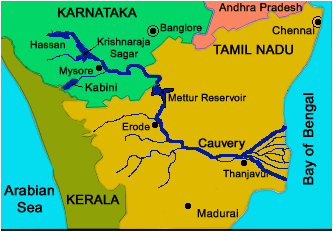
Geography
Cauvery river and major reservoirs

Why in news

  • Deficient rainfall and low reservoir storage have revived the dispute over the quantity of Cauvery water to be released from Karnataka to Tamil Nadu.
  • Karnataka sought a reduction in releases, while Tamil Nadu demanded adherence to the prescribed quantity.

Evolution of the dispute

  • The Cauvery Water Disputes Tribunal was constituted in 1990.
  • It delivered its final award in 2007.
  • In 2018, the Supreme Court modified the allocation and fixed Karnataka’s normal-year delivery to Tamil Nadu at 177.25 TMC.
  • The Cauvery Water Management Authority and Cauvery Water Regulation Committee were constituted in June 2018 to implement the decision. PIB background on Cauvery water governance

Why reservoir levels matter

  • Krishna Raja Sagara reservoir: Major storage facility in Karnataka.
  • Mettur reservoir: Regulates irrigation supplies to the Cauvery delta in Tamil Nadu.
  • Delayed releases from Mettur affect:
    • Kuruvai: Short-duration paddy crop
    • Samba–Thaladi: Longer-duration paddy crop
  • The delta is central to Tamil Nadu’s food security and accounted for a large share of the State’s recent paddy procurement.

Challenges in a distress year

  • The final award provides a normal-year release schedule, but shortages create disagreement over how the available deficit should be shared.
  • Karnataka emphasises drinking-water and irrigation requirements within the State.
  • Tamil Nadu depends heavily on upstream releases because cultivation in the delta begins before the northeast monsoon.
  • Excessive groundwater extraction is causing falling water tables and salinity intrusion in coastal areas.
  • Climate variability is making historical rainfall and inflow patterns less dependable.
Why it matters
  • The dispute demonstrates why interstate rivers require transparent reservoir data, predetermined distress-sharing rules and basin-wide water management.

Geography

05

Security Review of the Siliguri Corridor

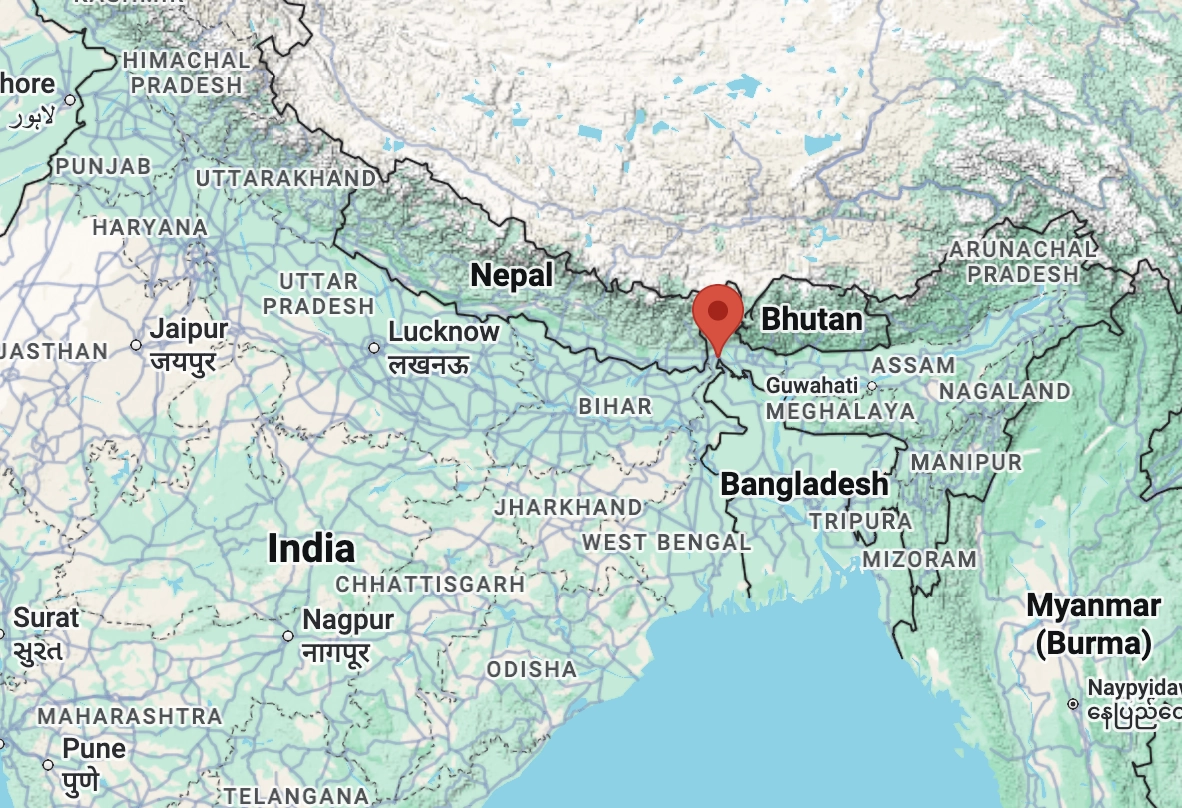
Geography
Location of the Siliguri Corridor

Why in news

  • The Union Home Minister reviewed the security and infrastructure of the Siliguri Corridor with the Army, border forces, Railways, road authorities and other agencies.
  • The review covered illegal immigration, encroachments, demographic changes, border management and protection of vital installations. PIB release

Geographical importance

  • The corridor is a narrow stretch of land in northern West Bengal connecting the rest of India with the northeastern States.
  • Nepal lies to its west and Bangladesh to its south.
  • Bhutan and the strategically sensitive Chumbi Valley region lie nearby.
  • Important roads, railways, pipelines and communication networks pass through this limited space.

Strategic vulnerabilities

  • Heavy dependence on a narrow transport corridor
  • Proximity to several international borders
  • Risk of disruption to civilian and military movement
  • Illegal migration, smuggling and cross-border crime
  • Encroachment around transport and security infrastructure
  • Vulnerability of railway lines, bridges and communication networks
Why it matters
  • Disruption of the corridor can affect trade, supplies and connectivity with the entire Northeast.
  • Security therefore requires both military preparedness and resilient alternative road, rail and air links.

Exercise Pitch Black and Exercise Udara Shakti

International Relations

Provides experience of operating with different aircraft, communication systems and tactical procedures. Strengthens defence relations with Australia, Malaysia and other Indo-Pacific partners. Improves the IAF’s ability to participate in complex multinational missions.

Sign in to read this story

Sunday, 23 Aug

Polity

01

Gorkhaland Issue: Centre Constitutes a Committee

Polity

Why in news

  • The Union government has decided to constitute a committee to finalise the terms of a proposed “permanent political solution” for the Gorkha community.
  • The committee will be chaired by former Deputy National Security Adviser and government interlocutor Pankaj Kumar Singh.

Background

  • The demand seeks a separate Gorkhaland State comprising the Darjeeling hills and adjoining areas of northern West Bengal.
  • The organised statehood movement became prominent during the 1980s.
  • Earlier administrative arrangements include:
    • Darjeeling Gorkha Hill Council, 1988
    • Gorkhaland Territorial Administration, 2011
  • The Gorkhaland Territorial Administration was created under a West Bengal law following a tripartite agreement involving the Union government, West Bengal government and Gorkha Janmukti Morcha.
  • It is a semi-autonomous administrative body, not a State or a Sixth Schedule autonomous council.

Constitutional process for creating a State

  • Article 3 empowers Parliament to form a new State or alter the area, boundary or name of an existing State.
  • Such a Bill:
    • Can be introduced only on the President’s recommendation.
    • Must be referred to the legislature of the affected State for its views.
    • Does not require the State legislature’s consent; its opinion is not binding on Parliament.
  • Parliament can pass the law by a simple majority. Constitution of India

Issues involved

  • Protection of Gorkha identity and language
  • Demand for greater control over local administration
  • West Bengal’s opposition to territorial division
  • Administrative viability of a new State
  • Strategic importance of the Darjeeling-Siliguri region
  • Future powers and financial position of the Gorkhaland Territorial Administration
Why it matters
  • The issue reflects the continuing tension between regional identity, demands for self-government and the territorial integrity of existing States.

Environment

02

Invasive Plants Converted into Biochar in Assam

Environment

Why in news

  • A habitat-restoration project in Assam is removing invasive alien plants and converting the resulting biomass into biochar.
  • The project covers two hectares in the Khalingduar Reserve Forest of Udalguri district in the Bodoland Territorial Region.

Invasive species being removed

  • Lantana camara
  • Chromolaena odorata
  • Mikania micrantha

These plants spread rapidly and compete with native vegetation for light, water, nutrients and space.

Impact on elephant habitat

  • Suppresses the regeneration of native grasses, shrubs and trees
  • Reduces the variety of food available to elephants and other herbivores
  • Alters the structure of the forest undergrowth
  • Increases the cost and difficulty of habitat management

What is biochar?

  • Biochar is a stable, carbon-rich material produced by heating organic biomass in an environment containing little or no oxygen.
  • This process is called pyrolysis.
  • Unlike ordinary burning, pyrolysis converts much of the biomass carbon into a solid form that decomposes slowly.

Potential benefits

  • Stores carbon in soil for long periods
  • Improves soil-water retention
  • Provides habitat for beneficial soil microorganisms
  • May improve soil structure and nutrient retention
  • Creates a productive use for removed invasive biomass

Limitations

  • Benefits depend on the original biomass and production temperature.
  • Improperly produced biochar may contain harmful compounds.
  • Removing visible plants is insufficient if seeds and roots remain.
  • Sites must be monitored repeatedly to prevent reinvasion.
  • Native vegetation must be actively restored after clearing.
Why it matters
  • The project combines invasive-species control, elephant-habitat restoration and long-term carbon storage.

Science & Technology

03

Evidence of 3.5-Billion-Year-Old Microbial Life in India

Science & Technology

Why in news

  • Researchers have reported evidence of microbial life in a rock from the Singhbhum Craton dating to approximately 3.5 billion years ago.
  • The study describes it as the oldest directly dated rock containing a confirmed biological signature.

What is the Singhbhum Craton?

  • A craton is an ancient and geologically stable block of continental crust.
  • The Singhbhum Craton extends across parts of Jharkhand and Odisha.
  • It contains some of India’s oldest rocks and preserves evidence about the formation of early continental crust.

The rock studied

  • Researchers examined a banded chert from Bhitardari.
  • Chert is a hard, fine-grained rock composed mainly of silica.
  • It can preserve organic material for billions of years but is difficult to date directly.

How was its age determined?

  • Zircon crystals associated with volcanic ash in the rock were examined.
  • Zircon contains uranium, which decays into lead at a known rate.
  • Measuring the uranium-lead ratio provides a geological clock.
  • Four of the eight zircon crystals analysed indicated an age of approximately 3,497 million years.

Evidence that the carbon was biological

  • The ratio of carbon isotopes resembled carbon processed by living organisms.
  • The carbon appeared to be degraded organic matter rather than later inorganic contamination.
  • Multiple chemical and structural indicators produced a converging biological signal.
Why it matters
  • Earth formed approximately 4.54 billion years ago.
  • The finding suggests that microbial life was established within about a billion years of Earth’s formation.
  • It may help scientists examine whether life emerges readily when suitable planetary conditions exist.
  • Claims of still older life exist, but many remain disputed because the rocks or biological signatures cannot be dated conclusively.

Science & Technology

04

Digitising Kannada and the Indian-Language AI Gap

Science & Technology
  • Unicode made Kannada text searchable and compatible across digital systems, unlike older proprietary font formats.
  • Indian-language artificial intelligence still suffers from limited high-quality, annotated datasets.
  • Kannada’s complex word formation makes translation, speech recognition and Optical Character Recognition more difficult.
  • Transliteration errors in voter cards, Aadhaar and land records can affect identity verification, property rights and access to services.
  • Project Vaani is building an open speech dataset covering Indian languages and dialects. Its first two phases cover 165 districts, 1,56,534 speakers and 105 languages.
  • Old books, manuscripts and oral traditions must also be digitised to prevent permanent loss of linguistic heritage.
Why it matters

Artificial intelligence will remain linguistically unequal unless Indian languages have reliable, open and locally governed digital datasets.

Science & Technology

05

National Space Day and India’s Private Space Ecosystem

Science & Technology

Why 23 August is National Space Day

  • Chandrayaan-3’s Vikram lander successfully soft-landed on the Moon on 23 August 2023.
  • India became:
    • The fourth country to achieve a lunar soft landing
    • The first country to land near the Moon’s southern polar region
  • The landing site was named Statio Shiv Shakti. ISRO background

Why in news

  • On National Space Day, the Prime Minister interacted with the heads of Indian space start-ups.
  • The interaction highlighted private work in:
    • Launch vehicles
    • Advanced propulsion
    • Global ground-station networks
    • Satellite docking and refuelling
    • Removal of non-functional satellites
    • Manufacturing pharmaceuticals in microgravity
    • Agricultural applications of satellite technology

PIB interaction with space start-ups

Institutional framework

  • Indian Space Research Organisation: Conducts national space missions and develops major space technologies.
  • Indian National Space Promotion and Authorisation Centre: Authorises, promotes and supervises private space activities.
  • NewSpace India Limited: Commercialises launch services, satellites and technologies developed by the Department of Space.

Growth of private participation

  • Around 440 space-technology start-ups are registered in India.
  • The Indian National Space Promotion and Authorisation Centre has issued 113 authorisations to 52 non-government entities, including 18 start-ups.
  • Private companies are developing launch vehicles, satellites, payloads, propulsion systems and downstream services. Department of Space data

Challenges

  • High capital requirements
  • Long development and testing cycles
  • Space-debris management
  • Insurance and liability
  • Protection of sensitive technology
  • Dependence on imported high-end components
  • Need for clear safety and spectrum regulations
Why it matters
  • Private participation can expand India’s share in the global space economy while allowing the national space programme to concentrate on strategic and scientific missions.

Earlier editions

  1. 44 26 Oct-1 Nov, 2026 10 entries
  2. 43 19-25 Oct, 2026 72 entries
  3. 42 12-18 Oct, 2026 73 entries
  4. 41 5-11 Oct, 2026 88 entries
  5. 40 28 Sep-4 Oct, 2026 105 entries
  6. 39 21-27 Sep, 2026 109 entries