Civil Services Prep

Weekly digest

UPSC current affairs, 7-13 Sep, 2026

149 entries, published 16 September 2026.

Monday, 7 Sep

International Relations

01

India–China military talks in Arunachal Pradesh

International Relations
  • India and China held Corps Commander-level talks in the eastern sector at Vacha-Damai in Arunachal Pradesh. Most earlier Corps Commander meetings had focused on eastern Ladakh.
  • The discussion covered peace along the Line of Actual Control, additional Border Personnel Meeting points and better communication between local commanders.
  • Regular meetings and hotlines can prevent patrol encounters from becoming larger confrontations.
  • The central difficulty remains that India and China do not agree on the exact alignment of the Line of Actual Control.
Why it matters

India and China held Corps Commander-level talks in the eastern sector at Vacha-Damai in Arunachal Pradesh. Most earlier Corps Commander meetings had focused on eastern Ladakh.

Polity

02

Proposal for 75% reservation in Karnataka

Polity
  • Karnataka’s Chief Minister proposed using the State’s socio-economic survey to examine reservation according to the population of different communities.
  • The Supreme Court’s Indra Sawhney judgment of 1992 ordinarily limited reservations to 50%, while allowing departure in exceptional circumstances.
  • Any increase must be supported by reliable evidence of social and educational backwardness and inadequate representation.
  • Major constitutional questions include equality under Article 14, reservation under Articles 15 and 16, and judicial review of the supporting data.
Why it matters

Karnataka’s Chief Minister proposed using the State’s socio-economic survey to examine reservation according to the population of different communities.

Polity

03

Gram Sabha and the Forest Rights Act

Polity

The Scheduled Tribes and Other Traditional Forest Dwellers (Recognition of Forest Rights) Act, 2006, commonly called the Forest Rights Act, corrects the historical denial of the rights of forest-dependent communities.

  • It recognises individual rights over cultivated forest land and community rights over grazing, fishing, minor forest produce and customary forest resources.
  • A Gram Sabha begins the process of receiving and verifying claims. Its recommendations are examined by Sub-Divisional and District-Level Committees.
  • Other Traditional Forest Dwellers must generally prove dependence on the forest for at least three generations, or 75 years, before December 13, 2005.
  • Section 3(2) permits limited diversion of forest land for specified public facilities. Such diversion must be below one hectare, normally cannot involve felling more than 75 trees per hectare, and requires the Gram Sabha’s recommendation.
  • The Act does not contain a blanket provision requiring Gram Sabha consent for every forest clearance. However, the recognition of forest rights must be completed, and applicable forest-diversion procedures may require Gram Sabha certification or approval before land is diverted. Ministry of Tribal Affairs
Why it matters

The Scheduled Tribes and Other Traditional Forest Dwellers (Recognition of Forest Rights) Act, 2006, commonly called the Forest Rights Act, corrects the historical denial of the rights of forest-dependent communities.

Polity

04

Preventing political manipulation of Scheduled Tribe status

Polity
  • Under Article 342, the President specifies the Scheduled Tribes for each State or Union Territory. Parliament alone can subsequently add or remove a community from the notified list.
  • State governments may send proposals, but these are examined by the Registrar General of India and the National Commission for Scheduled Tribes before Parliament acts.
  • Inclusion should be based on verifiable anthropological, social and historical evidence rather than electoral considerations.
  • Outdated classification criteria and weak surveys can exclude deserving communities or dilute benefits meant for groups facing serious disadvantage.
Why it matters

Under Article 342, the President specifies the Scheduled Tribes for each State or Union Territory. Parliament alone can subsequently add or remove a community from the notified list.

International Relations

05

India–Sri Lanka defence cooperation

International Relations
  • The Indian Defence Minister’s visit was intended to advance the Defence Cooperation Memorandum of Understanding signed in April 2025.
  • Cooperation includes military training, maritime surveillance, hydrography, disaster relief, capacity-building and possible air-defence coordination.
  • Sri Lanka lies close to major Indian Ocean shipping routes and is important for India’s maritime security.
  • India’s approach is connected with MAHASAGAR — Mutual and Holistic Advancement for Security and Growth Across Regions.
Why it matters

The Indian Defence Minister’s visit was intended to advance the Defence Cooperation Memorandum of Understanding signed in April 2025.

Heal in India Gateway

Government Schemes

The gateway is intended as a single digital platform through which international patients can find Indian hospitals, obtain treatment information and coordinate travel.

Sign in to read this story

Tuesday, 8 Sep

Economy

01

Alternative-fuel vehicles overtake petrol cars

Economy
  • India recorded retail sales of approximately 24.23 lakh vehicles in August 2026—17.51% higher than in August 2025, although 6.48% lower than in July 2026.
  • In the passenger-vehicle segment, compressed natural gas (CNG), hybrid and electric vehicles together accounted for 41.95% of sales, marginally exceeding petrol vehicles at 40.85% for the first time.
  • The individual shares were CNG 25.28%, hybrids 9.04% and electric vehicles 7.63%.
  • Lower running costs, greater availability of CNG models, growth in charging infrastructure and uncertainty surrounding the transition to E20 petrol contributed to the shift.
  • However, the category should not be treated as entirely clean: CNG remains a fossil fuel, while hybrids continue to use petrol. The environmental benefit also depends on how the electricity and hydrogen used by vehicles are produced.
Why it matters

India recorded retail sales of approximately 24.23 lakh vehicles in August 2026—17.51% higher than in August 2025, although 6.48% lower than in July 2026.

International Relations

02

UN-endorsed world map and India’s disputed boundaries

International Relations
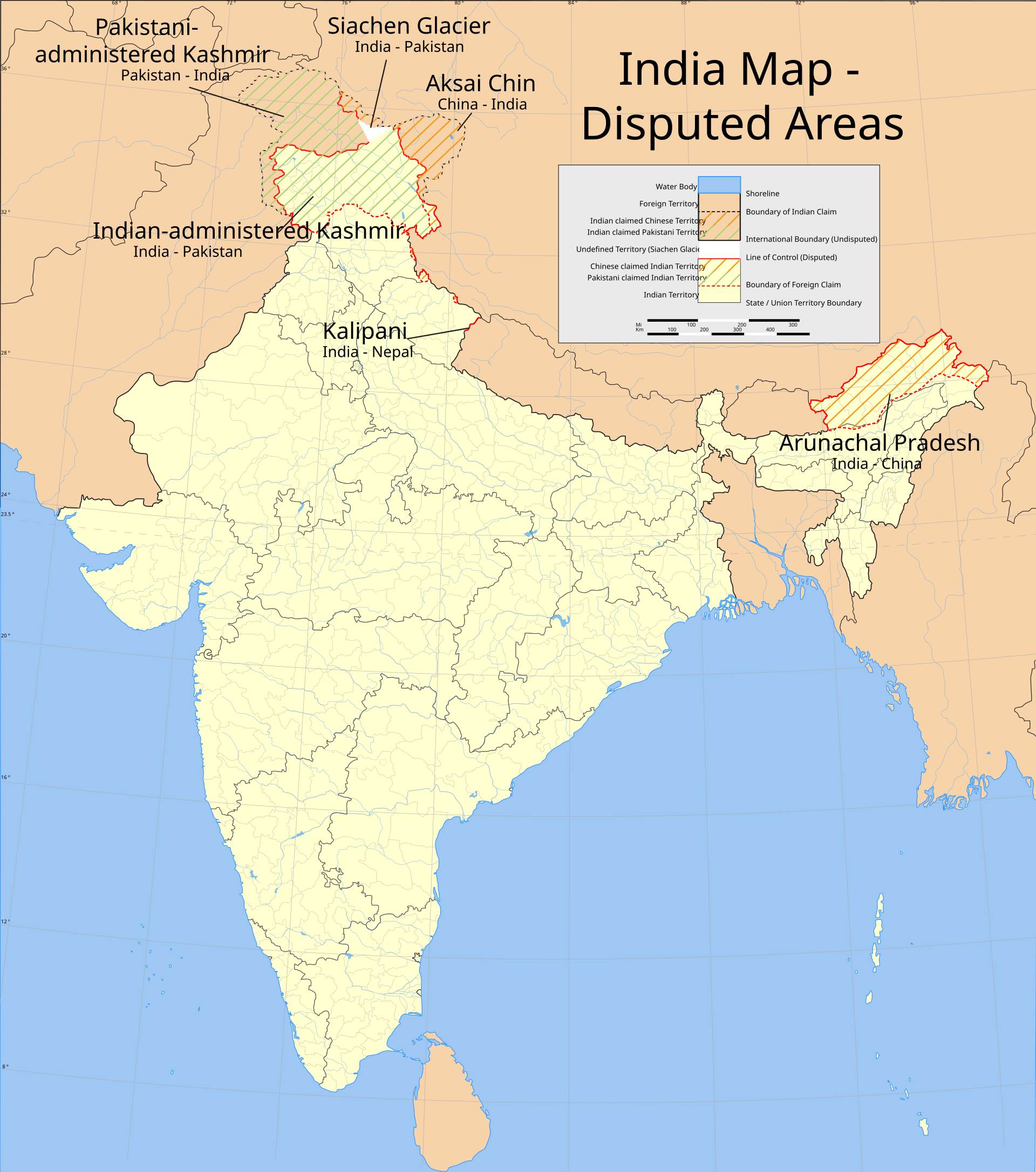
  • A world map issued by the United Nations in July 2026 and subsequently associated with the “Correct the Map” resolution showed Arunachal Pradesh and Aksai Chin between unspecified Indian and Chinese claim lines.
  • India supported the principle of giving Africa more proportionate representation through the Equal Earth projection, but clarified that this did not amount to endorsing any particular depiction of national boundaries.
  • India maintains that Arunachal Pradesh and the entire Union Territories of Jammu and Kashmir and Ladakh, including Aksai Chin, are integral parts of India.
  • The map identifies the Line of Control between India and Pakistan through a dotted line and explanatory note. The India-China claim lines, however, were not clearly labelled.
  • A UN map is a cartographic and administrative document. It does not create, transfer or legally determine sovereignty over a territory.

Equal Earth projection: An equal-area map projection designed to show the relative sizes of countries and continents more accurately. Unlike the Mercator projection, it does not greatly enlarge regions near the poles.

Map showing India and the principal disputed boundary areas
India’s boundary disputes include areas involving Pakistan and China.
Why it matters

A world map issued by the United Nations in July 2026 and subsequently associated with the “Correct the Map” resolution showed Arunachal Pradesh and Aksai Chin between unspecified Indian and Chinese claim lines.

Polity

03

Manipur proposes NRC update using 1951 as the base year

Polity
  • The Manipur government informed the Legislative Assembly that it would pursue an update of the National Register of Citizens (NRC), using 1951 as the base year, in consultation with the Union government.
  • Meitei and Naga organisations have demanded that the NRC exercise precede the Census and delimitation. Kuki-Zo organisations have opposed it as premature and potentially discriminatory.
  • The State has cited undocumented migration from Myanmar, particularly after the February 2021 military coup. The government stated that 14,992 of 24,475 identified undocumented immigrants had been sent back.
  • The issue is especially sensitive in Chandel, Kamjong and Tengnoupal, which border Myanmar.

What is the NRC?

The NRC is an official register of persons recognised as Indian citizens. At present, Assam is the only State where a Supreme Court-monitored NRC update has been completed.

Constitutional position

  • Citizenship falls in the Union List.
  • Articles 5–11 of the Constitution deal with citizenship, while Parliament regulates it through the Citizenship Act, 1955.
  • A State government cannot independently create citizenship criteria or conclusively determine citizenship without authority under Union law.

Major concerns

  • Many legitimate residents may not possess documents dating back to 1951.
  • Conflict, displacement, poverty and poor record-keeping can cause wrongful exclusion.
  • In an ethnically divided State, the process may deepen mistrust unless transparent appeal and correction mechanisms are provided.
Why it matters

The Manipur government informed the Legislative Assembly that it would pursue an update of the National Register of Citizens (NRC), using 1951 as the base year, in consultation with the Union government.

Economy

04

FATF warns about the rise of digital hawala

Economy

The Financial Action Task Force (FATF) found that more than 80% of reporting jurisdictions regarded underground banking and hawala-like systems as important channels used by professional money launderers. Nearly 70% reported growing use of technology in what is being called “digital hawala”. Some investigated networks transferred more than €500 million within a few months. FATF report

Term Simple explanation
Hawala An informal value-transfer system based on trusted agents. Money may not physically cross the border; agents later settle their accounts separately.
Hawaladar The intermediary who accepts money or instructions from a customer and arranges payment through another agent.
Underground banking Financial services conducted outside licensed and regulated banks.
Digital hawala Hawala arrangements coordinated through encrypted messaging, instant payments, digital wallets, fintech applications or virtual assets.
Money laundering Concealing the criminal origin of money so that it appears legitimate.
Mule account A bank or digital-payment account used to receive and rapidly transfer illegally obtained funds, sometimes without the account holder understanding the full scheme.
Virtual asset A digitally transferable representation of value, such as a cryptocurrency.
Stablecoin A virtual asset designed to maintain a stable value, usually by linking it to a currency such as the US dollar.
Virtual Asset Service Provider A business that exchanges, transfers, stores or administers virtual assets on behalf of users.
Fiat-to-crypto conversion Converting government-issued currency, such as rupees or dollars, into virtual assets or vice versa.

Digital hawala is difficult to detect because it combines an old trust-based network with regulated bank accounts, shell companies, instant payments, prepaid cards, encrypted applications and crypto-assets. Authorities therefore need cross-border intelligence sharing and regulation of both entry and exit points.

Why it matters

The Financial Action Task Force (FATF) found that more than 80% of reporting jurisdictions regarded underground banking and hawala-like systems as important channels used by professional money launderers. Nearly 70% reported growing use of technology in what is being called “digital hawala”.

Science & Technology

05

Defence acquisitions worth approximately ₹1.10 lakh crore

Science & Technology
  • The Defence Acquisition Council, chaired by the Defence Minister, granted Acceptance of Necessity for capital-acquisition proposals estimated at ₹1.10 lakh crore.
  • Approximately 98% of the proposed procurement is intended to come from Indian industry.
  • The Army proposals include Chemical, Biological, Radiological and Nuclear reconnaissance vehicles, high-mobility vehicles, advanced light helicopters, mechanical mine layers, trawl tanks and the Sarvatra Bridge System.
  • The Navy proposals include Arudhra surveillance radars and indigenous marine gas turbines for warship propulsion.
  • Ground-based multipurpose jammers will help disrupt adversary radars. The Defence Forces Secure Access Card will replace several paper identity documents with interoperable radio-frequency identification smart cards.

Acceptance of Necessity: It is the in-principle administrative approval establishing that the military requirement is necessary. It is not a purchase order and does not mean that a contract has already been signed.

Why it matters

The Defence Acquisition Council, chaired by the Defence Minister, granted Acceptance of Necessity for capital-acquisition proposals estimated at ₹1.10 lakh crore.

PM-SETU and industry-led transformation of ITIs

Government Schemes

The fifth National Steering Committee approved Strategic Investment Plans worth ₹735.70 crore, taking cumulative approvals to ₹2,171 crore across nine Industrial Training Institute clusters. Rajasthan became the first State to execute the required shareholder agreement for an industry-led cluster.

Sign in to read this story

Lumpy Skin Disease

Science & Technology

Lumpy Skin Disease is a viral disease affecting cattle and buffaloes. It is caused by a Capripoxvirus and spreads mainly through blood-feeding insects such as mosquitoes, flies and ticks.

Sign in to read this story

Wednesday, 9 Sep

Economy

01

Western Dedicated Freight Corridor completed

Economy
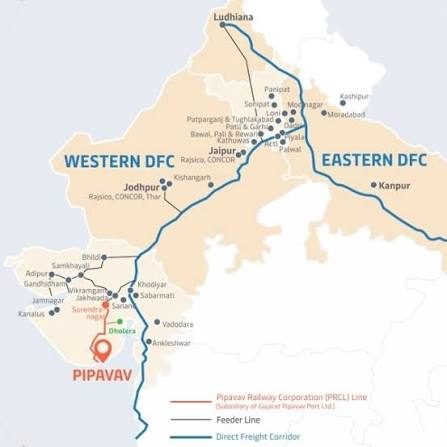
  • The Western Dedicated Freight Corridor (WDFC), connecting Dadri in Uttar Pradesh with Jawaharlal Nehru Port near Navi Mumbai, has been completed.
  • It passes through Uttar Pradesh, Haryana, Rajasthan, Gujarat and Maharashtra and connects major industrial regions with western ports.
  • A freight journey of about 100 km that earlier took approximately 6.5 hours can now take less than half that time. Some road journeys that took around 30 hours could be completed by rail in about 10–12 hours.
  • Dedicated corridors separate slow-moving freight trains from passenger trains, increasing average speeds and freeing capacity on conventional railway routes.
  • The corridor can reduce logistics costs, road congestion, fuel consumption and carbon emissions. It also supports industrial corridors, container traffic and export competitiveness.
  • Its effectiveness will depend on efficient last-mile rail links, multimodal terminals and affordable access for smaller businesses.
Map showing the Western Dedicated Freight Corridor and its Pipavav connection
The Western Dedicated Freight Corridor connects major industrial and port-linked routes.
Why it matters

The Western Dedicated Freight Corridor (WDFC), connecting Dadri in Uttar Pradesh with Jawaharlal Nehru Port near Navi Mumbai, has been completed.

Polity

02

Census 2027 and concerns over the questionnaire

Polity
  • The population-enumeration phase of Census 2027 is expected to use a questionnaire containing approximately 40 questions.
  • Besides basic demographic information, questions may cover nationality, migration, education, employment, housing conditions and access to communication or financial services.
  • India’s Census is conducted under the Census Act, 1948. Census is included in the Union List, making it the Union government’s responsibility.
  • It is conducted by the Office of the Registrar General and Census Commissioner under the Ministry of Home Affairs.
  • Census information is used for welfare planning, constituency delimitation, resource distribution and preparing socioeconomic indicators.

Important concerns include:

  • Collecting Aadhaar, mobile, passport or banking-related information could create confusion about whether identifiers are mandatory.
  • Census data must remain confidential and should not be used against an individual in judicial or administrative proceedings.
  • Census and the National Population Register are legally distinct exercises, even if field operations may overlap.
  • Institutional households—hostels, prisons, hospitals and old-age homes—need specially designed enumeration procedures.
  • Excessively complex questions could increase errors, omissions and mistrust among respondents.
Why it matters

The population-enumeration phase of Census 2027 is expected to use a questionnaire containing approximately 40 questions.

Polity

03

Constitutional safeguards proposed for Ladakh

Polity

Representatives of the Leh Apex Body and Kargil Democratic Alliance continued discussions with the Ministry of Home Affairs over Statehood, employment protection, political representation and safeguards for Ladakh’s land and culture.

Sixth Schedule

  • The Sixth Schedule, under Articles 244(2) and 275(1), provides special administrative arrangements for notified tribal areas in Assam, Meghalaya, Tripura and Mizoram.
  • It creates Autonomous District Councils and Regional Councils.
  • These councils can make laws on subjects such as land, forests other than reserved forests, village administration, inheritance and customary practices.
  • They may establish village courts, levy certain taxes and manage local institutions.
  • Ladakh cannot automatically be placed under the Sixth Schedule. Parliament would have to provide the necessary constitutional arrangement.

Article 371 and related provisions

  • Articles 371 to 371J contain different special provisions for individual States.
  • Article 371 itself concerns Maharashtra and Gujarat, while later provisions protect interests such as customary law, land ownership, tribal administration or regional development in States including Nagaland, Mizoram, Sikkim and Karnataka.
  • The government reportedly discussed a customised, sui generis or Article 371-type arrangement for Ladakh. This could provide an elected territorial institution with specified legislative, financial and executive powers.
  • Such an arrangement would be different from both full Statehood and the existing Union Territory structure.
  • Other proposals reportedly included strengthening hill councils, creating a High Court bench and framing rules for allotment of government wasteland or Nautor land.
Why it matters

Representatives of the Leh Apex Body and Kargil Democratic Alliance continued discussions with the Ministry of Home Affairs over Statehood, employment protection, political representation and safeguards for Ladakh’s land and culture.

International Relations

04

India–Russia relations and the Ukraine conflict

International Relations
  • India and Russia prepared for high-level discussions ahead of the BRICS Summit scheduled in New Delhi on September 12–13.
  • India reiterated that the Russia–Ukraine conflict should be resolved through dialogue and diplomacy.
  • Around 24 Indian nationals were reportedly still serving in Russian military formations. Russia indicated that steps would be taken to release and repatriate them.
  • India–Russia ties include defence cooperation, nuclear energy, space, fertilisers, hydrocarbons and trade. Russia remains an important supplier of military equipment and crude oil to India.
  • India has maintained diplomatic engagement with both Russia and Ukraine while avoiding endorsement of military escalation.
  • Major challenges include Western sanctions, payment difficulties, transport bottlenecks, the bilateral trade imbalance and India’s growing strategic partnership with the United States and Europe.
Why it matters

India and Russia prepared for high-level discussions ahead of the BRICS Summit scheduled in New Delhi on September 12–13.

Polity

05

Public Accounts Committee examines non-transfer of cesses

Polity

The Public Accounts Committee examined the reported failure to transfer approximately ₹9,222 crore collected through cesses and levies to four designated reserve funds during 2024–25. The matter was also raised in a Comptroller and Auditor General report.

Public Accounts Committee

  • The Public Accounts Committee is a parliamentary financial committee constituted annually.
  • It has 22 members: 15 from the Lok Sabha and seven from the Rajya Sabha.
  • Its term is one year, and a minister cannot become a member.
  • Its chairperson is appointed by the Lok Sabha Speaker. By convention, the position is generally given to a member of the Opposition.
  • It examines appropriation accounts, finance accounts and reports of the Comptroller and Auditor General.
  • It checks whether public money was spent for the purpose authorised by Parliament and whether expenditure followed financial rules.
  • It mainly conducts post-expenditure scrutiny and ordinarily does not question the merits of government policy.

A cess is imposed for a specified purpose. Although Union cesses are generally excluded from the divisible pool shared with States, the proceeds should be credited to and used for the stated purpose. Non-transfer to designated funds weakens transparency and may allow the money to remain in the Consolidated Fund without being used as promised. Rajya Sabha parliamentary handbook

Why it matters

The Public Accounts Committee examined the reported failure to transfer approximately ₹9,222 crore collected through cesses and levies to four designated reserve funds during 2024–25. The matter was also raised in a Comptroller and Auditor General report.

Thursday, 10 Sep

Polity

01

Three-Language Formula and Linguistic Rights

Polity

Why in news?
The Union government told the Supreme Court that it had reservations about treating English as a native or indigenous language. The case also concerns the implementation of CBSE’s three-language requirement and objections raised by minority educational institutions.

Three-language formula

The formula is an education-policy arrangement, not an express constitutional requirement. Under NEP 2020:

  • Students study three languages.
  • At least two must be languages native to India.
  • The choice should reflect the preferences of States, regions and students.
  • No language should be imposed on any State.
  • Students may change their language choices in Grades 6 or 7, provided they attain the required proficiency by the end of secondary school.
  • The home, mother, local or regional language should, wherever possible, be the medium of instruction until Grade 5 and preferably until Grade 8. NEP 2020

Constitutional linguistic rights

Provision Protection
Article 29(1) Any section of citizens with a distinct language, script or culture has the right to conserve it.
Article 29(2) Admission to a State-maintained or State-aided institution cannot be denied solely on grounds such as language.
Article 30(1) Religious and linguistic minorities may establish and administer educational institutions of their choice.
Article 30(2) The State cannot discriminate against minority institutions while granting aid.
Article 347 The President may recognise a language for specified official purposes when a substantial section of a State’s population demands it.
Article 350A States and local authorities should endeavour to provide mother-tongue instruction at the primary stage for linguistic-minority children.
Article 350B Provides for a Special Officer for Linguistic Minorities.
Eighth Schedule Recognises 22 languages, but constitutional protection is not limited to these languages.

Article 350A requires the State to make an effort; it does not guarantee that every student can demand instruction in any language at every institution. Constitution of India

Why it matters

The Union government told the Supreme Court that it had reservations about treating English as a native or indigenous language. The case also concerns the implementation of CBSE’s three-language requirement and objections raised by minority educational institutions.

Environment

02

Marine Pollution from Cargo Lost off Kerala

Environment

Why in news?
The International Tanker Owners Pollution Federation assessed containers lost after a fire aboard the Singapore-flagged vessel Wan Hai 503 off Kerala on June 9, 2025.

  • The ship was carrying approximately 1,754 containers.
  • Its cargo included plastic resins and pellets, food products, inorganic chemicals and miscellaneous goods.
  • The assessment found no significant immediate threat to the marine environment.
  • Containers can nevertheless corrode over time. Their packaging may lose integrity and gradually release materials into the sea, possibly over several decades.
  • Plastic pellets can spread through ocean currents, persist for long periods and enter marine food chains.
  • The National Green Tribunal’s Southern Bench took suo motu cognisance and sought information about the cargo and its environmental consequences.

The incident illustrates the precautionary principle, polluter-pays principle, marine-litter problem and environmental liability of shipping companies.

Why it matters

The International Tanker Owners Pollution Federation assessed containers lost after a fire aboard the Singapore-flagged vessel Wan Hai 503 off Kerala on June 9, 2025.

Environment

03

Open Waste Burning and Winter Air Pollution

Environment

A WRI India study based on field surveys conducted between 2019 and 2026 in 11 polluted Indian cities found that open waste burning can become three times more frequent during winter.

  • Falling temperatures and stagnant atmospheric conditions reduce the dispersal of pollutants.
  • Tier-3 cities recorded the highest winter incidence of waste burning among the cities studied.
  • Open burning contributed less than 1% of total citywide PM2.5 and PM10 emissions.
  • However, it creates severe local exposure because burning usually occurs near homes, roads and waste dumps.
  • Burning mixed waste can release fine particulate matter, carbon monoxide, dioxins, furans and toxic metals.
  • Poorer neighbourhoods experienced more burning, indicating unequal access to regular waste collection and municipal services.

Exam takeaway: A pollution source may have a small share in total city emissions but still produce serious health effects among nearby residents.

Why it matters

A WRI India study based on field surveys conducted between 2019 and 2026 in 11 polluted Indian cities found that open waste burning can become three times more frequent during winter.

Polity

04

De-reservation of Government Vacancies

Polity

De-reservation means converting a vacancy reserved for an SC, ST or OBC candidate into an unreserved vacancy so that it can be filled by a candidate from another category.

Normal procedure

  • A reserved vacancy should be filled by a candidate belonging to the relevant category.
  • Interchange between different reserved categories is ordinarily not permitted.
  • If an eligible candidate is unavailable, the post generally remains vacant and is carried forward as a backlog vacancy.
  • Authorities may use relaxed standards, special recruitment drives or temporary arrangements where the rules permit.

Exceptional de-reservation

De-reservation in direct recruitment has generally been prohibited since April 1, 1989. It may be considered for a Group-A post only in rare and exceptional cases involving public interest. The department must:

  1. Explain why leaving the post vacant would seriously harm public interest.
  2. Consult the relevant commission for the reserved category.
  3. Place the proposal before the Committee of Secretaries.
  4. Obtain the final decision of the Minister responsible for DoPT.

Different procedures apply to de-reservation in promotion when eligible SC or ST employees remain unavailable despite prescribed efforts. DoPT handbook

Why in news?
DoPT said that consolidated information on de-reservation proposals received during the previous six years was not readily available. The NCSC had complained that some proposals did not sufficiently disclose the efforts made to fill reserved posts.

Why it matters

DoPT said that consolidated information on de-reservation proposals received during the previous six years was not readily available. The NCSC had complained that some proposals did not sufficiently disclose the efforts made to fill reserved posts.

Polity

05

Marital Rape Exception

Polity

Why in news?
The Supreme Court considered whether a husband could be prosecuted for rape while the statutory marital exception continued to operate. The matter arose from an appeal against a 2022 Karnataka High Court decision that allowed rape charges against a husband.

Present legal position

  • Section 63 of the Bharatiya Nyaya Sanhita defines rape largely on the basis of absence of consent.
  • However, its marital exception states that sexual acts by a man with his wife, when she is at least 18 years old, do not constitute rape under that section.
  • Non-consensual intercourse by a husband when the spouses are living separately is independently punishable under Section 67.
  • Other remedies may be available for cruelty, causing hurt and sexual abuse under the BNS and the Protection of Women from Domestic Violence Act.
  • The central legal question is whether the exception violates equality, dignity, bodily autonomy and decisional privacy under Articles 14, 15 and 21. Bharatiya Nyaya Sanhita

Important case-law box

  • Independent Thought v. Union of India (2017): The Supreme Court read down the former IPC exception insofar as it applied to wives below 18. Sexual intercourse with a minor is an offence irrespective of marriage.
  • RIT Foundation v. Union of India (2022): The Delhi High Court delivered a split verdict. One judge found the exception unconstitutional, while the other upheld it. The matter therefore did not produce a binding majority ruling.
  • Hrishikesh Sahoo v. State of Karnataka (2022): The Karnataka High Court held that the marital exception should not prevent prosecution of the husband in the case before it. The husband’s appeal reached the Supreme Court.
  • X v. Principal Secretary, Health and Family Welfare Department (2022): The Supreme Court held that sexual assault by a husband may be treated as rape for accessing abortion under the MTP framework. It expressly limited this interpretation to the MTP Act and did not remove the criminal-law exception.
  • Joseph Shine v. Union of India (2018): While dealing with adultery, the Supreme Court emphasised that marriage does not extinguish a woman’s dignity, privacy or sexual autonomy.

The Supreme Court has therefore recognised the autonomy of married women in several contexts, but a final authoritative ruling on the constitutional validity of the adult marital-rape exception remains crucial. Supreme Court judgment on the MTP framework

Why it matters

The Supreme Court considered whether a husband could be prosecuted for rape while the statutory marital exception continued to operate. The matter arose from an appeal against a 2022 Karnataka High Court decision that allowed rape charges against a husband.

Friday, 11 Sep

International Relations

01

India–China engagement at the New Delhi BRICS Summit

International Relations
  • Why in news: Chinese President Xi Jinping was expected in New Delhi for the 18th BRICS Summit on 12–13 September and for talks with Prime Minister Narendra Modi. It would be his first visit to India since the 2019 Mamallapuram informal summit.
  • India was expected to seek easier access to Chinese industrial inputs and relief from export controls. China was expected to press India to relax restrictions on Chinese investment.
  • Relations had deteriorated after the eastern Ladakh military stand-off began in April 2020 and the Galwan clash occurred in June 2020.
  • A cautious normalisation followed the Modi–Xi meeting at the Kazan BRICS Summit in October 2024 and their interaction at the Tianjin SCO Summit in August 2025.
  • The engagement does not by itself amount to a strategic realignment. Persistent concerns include the boundary dispute, trade imbalance, investment screening and China’s relations with Pakistan.
  • The summit was also expected to discuss the wars in West Asia and Ukraine and their effects on energy, food and supply-chain security.
Why it matters

The visit placed India–China crisis management and BRICS cooperation in focus after six years of serious border tension.

History & Culture

02

Vande Mataram: history and official rendition

History & Culture
  • Why in news: The Karnataka Cabinet directed that the first two stanzas of Vande Mataram be sung at ordinary State functions, while all six stanzas be used at functions attended by the President, Vice-President, Prime Minister or Governor.
  • Bankim Chandra Chattopadhyay composed the song in 1875 and included it in his Bengali novel Anandamath in 1882.
  • Rabindranath Tagore sang it at the 1896 session of the Indian National Congress in Calcutta. It later became a rallying cry during the Swadeshi movement against the 1905 Partition of Bengal.
  • The first two stanzas praise the natural beauty and abundance of the motherland. Later stanzas use religious imagery; the customary official rendition is therefore limited to the first two.
  • On 24 January 1950, Constituent Assembly President Rajendra Prasad stated that Vande Mataram, which had played a historic role in the freedom struggle, would be honoured equally with Jana Gana Mana.
  • Jana Gana Mana is the National Anthem, while Vande Mataram is conventionally treated as the National Song.

Government background · Constituent Assembly debate, 24 January 1950

Why it matters

The Karnataka order revived questions about the song’s history, the official two-stanza version and the distinction between India’s National Anthem and National Song.

Polity

03

Front-of-pack warning labels for packaged food

Polity
  • Why in news: The Supreme Court asked the Food Safety and Standards Authority of India (FSSAI) to explain how it would decide whether a packaged food is high in sugar, salt or fat.
  • A public-interest petition sought clear front-of-pack warnings for products high in salt, sugar and saturated fat, especially to protect children and help consumers make informed choices.
  • The proposal under discussion uses a red hexagonal warning when a product exceeds prescribed limits for two or more specified nutrients.
  • The thresholds would draw on the Indian Council of Medical Research–National Institute of Nutrition’s 2024 Dietary Guidelines for Indians.
  • Front-of-pack labelling gives important nutrition information on the main display panel instead of leaving it only in a detailed table on the back of a packet.
  • Effective regulation requires scientifically defensible thresholds, uniform application, readable labels and protection against misleading health claims.
Why it matters

The case links the right to informed consumer choice with the State’s duty to regulate food safety and reduce diet-related disease.

Polity

04

Registered unrecognised political parties and recognition criteria

Polity
  • Why in news: A newspaper investigation reported that six registered unrecognised political parties (RUPPs) in Gujarat received about ₹1,700 crore in donations in 2023–24—more than the combined ₹1,480 crore reported by five national parties other than the BJP.
  • A political party is registered by the Election Commission of India under Section 29A of the Representation of the People Act, 1951. Registration does not automatically make it a recognised State or national party.
  • RUPPs may claim income-tax exemption, field candidates and, subject to conditions, obtain a common symbol. They may appoint up to 20 star campaigners, compared with 40 for recognised parties.
  • Parties must report contributions above ₹20,000 and generally receive donations above ₹2,000 through banking channels. Failure to submit the contribution report can remove the tax exemption for that year.
  • In Indian National Congress (I) v. Institute of Social Welfare (2002), the Supreme Court held that the ECI has no general power to deregister a party. Registration may be cancelled in limited situations such as fraud, ceasing to uphold constitutional principles, or being declared unlawful.

Recognition as a State party

A registered party qualifies if it satisfies any one of these conditions in a State:

RouteRequirement
Vote-and-seat test in an Assembly electionAt least 6% of valid votes and at least 2 Assembly seats.
Vote-and-seat test in a Lok Sabha electionAt least 6% of valid votes in the State and at least 1 Lok Sabha seat from the State.
Assembly-seat testAt least 3% of Assembly seats or 3 seats, whichever is higher.
Lok Sabha-seat testAt least 1 Lok Sabha seat for every 25 seats, or fraction thereof, allotted to the State.
Vote-share testAt least 8% of valid votes in the State in a Lok Sabha or Assembly election.

Recognition as a national party

A party qualifies if it satisfies any one of these conditions:

  • At least 6% of valid votes in four or more States in Lok Sabha or Assembly elections, plus at least 4 Lok Sabha seats;
  • At least 2% of Lok Sabha seats—currently 11 seats—with members elected from at least three States; or
  • Recognition as a State party in at least four States.

The six recognised national parties are the Aam Aadmi Party, Bahujan Samaj Party, Bharatiya Janata Party, Communist Party of India (Marxist), Indian National Congress and National People’s Party.

Election Symbols Order and recognition rules

Why it matters

The report highlighted gaps in political-finance transparency and the ECI’s limited statutory power to remove inactive or non-compliant registered parties.

Environment

05

Tara coal block and the Hasdeo–Aranya landscape

Environment
  • Why in news: The Tara (Revised) coal block in Chhattisgarh was auctioned after having been denotified in 2023, reviving long-running opposition by Adivasi and local communities in the Hasdeo–Aranya forest landscape.
  • The block covers about 5,000 acres. Opponents estimate that more than 4,000 acres are dense forest and that mining could affect over ten lakh trees.
  • The successful bidder was CG Syn-Gas and Chemicals, associated with Mundra Synenergy and Adani Enterprises.
  • Communities have opposed mining for about 15 years through Gram Sabha resolutions, sit-ins and marches. They argue that forest loss threatens livelihoods, water security and cultural connections to the land.
  • The landscape is close to the Lemru Elephant Reserve and forms part of a larger wildlife corridor. Habitat fragmentation can increase human–elephant conflict.
  • Compensatory plantations do not reproduce the biodiversity, soil, hydrology and community uses of an old natural forest.
  • The dispute also raises questions about the consistency of coal-block denotification and re-auction decisions and the weight given to Gram Sabha consent.
Why it matters

The re-auction brought the conflict between energy extraction, forest conservation, tribal rights and local consent back into focus.

Saturday, 12 Sep

Polity

01

Prolonged imprisonment and bail under the UAPA

Polity
  • Why in news: The Supreme Court granted ten days’ interim bail to a person who had spent nearly five years and eleven months in custody under the Unlawful Activities (Prevention) Act. Only 20 of approximately 50 prosecution witnesses had been examined. The temporary release allowed him to care for his seriously ill mother and hearing-impaired child.
  • Section 43D(5) of the UAPA makes bail difficult when the court finds reasonable grounds for believing that the accusations are prima facie true.
  • This restriction does not take away the constitutional powers of the Supreme Court and High Courts. Article 21 protects personal liberty and the right to a speedy trial.
  • In Union of India v. K.A. Najeeb (2021), the Supreme Court held that constitutional courts may grant bail when incarceration has become excessive and the trial is unlikely to conclude soon.
  • The Court has subsequently clarified that delay is important but not the only consideration. The seriousness of the offence, the accused’s role, the strength of the prima facie case and the possibility of influencing witnesses must also be examined.
  • Interim bail is temporary and conditional. It does not amount to acquittal or a finding that the allegations are false.

UAPA text · Supreme Court judgment on prolonged incarceration

Why it matters

The case illustrates the balance between national security legislation and the constitutional protection of liberty and speedy justice.

International Relations

02

BRICS financial architecture: NDB and CRA

International Relations
  • Why in news: The BRICS summit revived discussion about strengthening financial institutions that can supplement the World Bank and International Monetary Fund and reduce excessive dependence on the US dollar.
  • The New Development Bank was created by the BRICS countries through an agreement signed at the 2014 Fortaleza Summit and began operations in 2015. It finances infrastructure and sustainable-development projects.
  • It has an authorised capital of $100 billion. Its five founding members—Brazil, Russia, India, China and South Africa—initially subscribed $50 billion equally.
  • Its membership has expanded to include Bangladesh, the UAE, Egypt, Algeria and Uzbekistan. Project approvals had reached about $39 billion by the end of 2024.
  • Challenges include dependence on dollar-denominated borrowing, limited local-currency financing, credit-rating considerations and the suspension of new transactions in Russia after 2022.
  • The Contingent Reserve Arrangement is a separate $100-billion liquidity arrangement for members facing short-term balance-of-payments pressure. China contributes $41 billion; India, Brazil and Russia $18 billion each; and South Africa $5 billion.
  • The CRA has never been activated. It lacks a permanent secretariat and an independent economic-surveillance system, while access beyond a specified portion is linked to an IMF-supported programme.

NDB institutional information · NDB members

Why it matters

Stronger BRICS institutions could expand development finance and local-currency settlement, but they require credible governance, risk assessment and operational capacity.

Polity

03

Road safety and the Safe System approach

Polity
  • Why in news: India has roughly 1% of the world’s vehicles but accounts for about 11% of global road deaths. In 2024, two-wheeler users constituted 46.2% of fatalities and pedestrians 20.6%.
  • The Safe System approach assumes that people will sometimes make mistakes and designs the transport system so those mistakes do not cause death or serious injury.
  • Its principles are that no death is acceptable, the human body has limited tolerance to impact, responsibility is shared and several protective layers must operate together.
  • Safer roads require median barriers, protected pedestrian crossings, traffic calming, forgiving roadsides and separation of fast and vulnerable traffic.
  • Safe speeds must reflect road design and the presence of pedestrians, cyclists and two-wheelers. Safer vehicles require crash protection, braking systems, seat belts, helmets and effective fitness checks.
  • Post-crash care requires quick detection, ambulances, trauma centres and coordinated emergency response.
  • The Motor Vehicles (Amendment) Act, 2019 strengthened penalties, electronic enforcement, vehicle-recall provisions, compensation mechanisms and the institutional framework for road safety.

National Road Safety Policy

Why it matters

Road safety is a public-health and governance issue. Enforcement alone cannot compensate for unsafe road engineering, weak public transport and inadequate trauma care.

Economy

04

Commercialisation of pilgrimage tourism

Economy
  • Why in news: The rapid growth of premium pilgrimage packages, helicopter services, hotels and large public-infrastructure projects around religious destinations has renewed debate about commercialisation.
  • Spiritual tourism generates employment in transport, hospitality, handicrafts, food services and local guiding.
  • The Char Dham helicopter market was reported to have crossed ₹1,000 crore, while spiritual tourism was projected to grow at about 18.2% annually.
  • Under PRASHAD, 54 projects costing approximately ₹1,726.74 crore had been sanctioned by March 2026.
  • PRASHAD—Pilgrimage Rejuvenation and Spiritual Heritage Augmentation Drive—is a Central Sector scheme supporting infrastructure at pilgrimage and heritage destinations.
  • Swadesh Darshan supports integrated tourism circuits. Its second version places greater emphasis on sustainable and responsible destination development.
  • Commercialisation can improve access and amenities, but it can also exclude poorer pilgrims, inflate land prices and place fragile mountain and river ecosystems under pressure.
  • Large gatherings require carrying-capacity assessment, crowd management, waste treatment, public transport and disaster preparedness. Public investment must create durable civic infrastructure rather than primarily subsidising private luxury services.

Ministry of Tourism scheme guidelines

Why it matters

Pilgrimage tourism demonstrates the need to balance economic activity, cultural character, equitable access and environmental sustainability.

Economy

05

Women-led digital and drone agriculture

Economy
  • Why in news: Women from self-help groups in Telangana are being trained to operate agricultural drones and use digital tools in farming.
  • One featured farmer operated a crop-spraying drone costing about ₹7.90 lakh after receiving ten days of training. Thirty-five women across 13 mandals were reportedly trained through the District Rural Development Agency and partner institutions.
  • Drones can spray pesticides or nutrients quickly and reduce workers’ direct exposure to chemicals.
  • Satellite imagery, weather applications, Internet of Things sensors, geographical information systems and smart irrigation can support more precise farming.
  • Drone ownership may not be economical for individual small farmers. Custom-hiring centres and SHG-operated services can spread the equipment cost across many users.
  • Credit, insurance, repair facilities, trained technicians and predictable service demand are necessary for such enterprises to remain viable.
  • Poor connectivity, low digital literacy, small holdings and farmer indebtedness continue to limit adoption. Universities and incubators should test technology under local conditions rather than merely promote equipment sales.
Why it matters

Women-run agricultural service enterprises can combine rural livelihood generation with technological modernisation, provided training and market access continue after the initial subsidy.

BRICS New Delhi Declaration

International Relations

The declaration shows the expanded BRICS agenda, but it is a political commitment rather than an enforceable treaty. Implementation will depend on consensus among a diverse membership.

Sign in to read this story

Steel-slag roads

Science & Technology

Steel-slag roads are an example of circular-economy infrastructure, converting industrial waste into a construction input while reducing pressure on natural aggregates.

Sign in to read this story

Sunday, 13 Sep

Polity

01

Baiga child deaths expose gaps in tribal healthcare

Polity
  • Why in news: Several Baiga children died during the monsoon in villages of Balaghat district, Madhya Pradesh. The official toll was 36, although local reports suggested that it could be higher. At least 86 children were hospitalised, while officials said more than 450 children received treatment.
  • Reported illnesses included measles, malaria, respiratory infections, anaemia, malnutrition and dehydration. Children were especially vulnerable because of weak immunity and delayed access to treatment.
  • The Baiga are a Particularly Vulnerable Tribal Group concentrated in districts including Mandla, Dindori, Balaghat, Shahdol, Umaria and Anuppur. Their livelihoods traditionally depend on small-scale agriculture, forest produce and wage labour.
  • Remote settlements, poor roads, inadequate nutrition, shortage of medical personnel and dependence on traditional healers can delay diagnosis and treatment.
  • PM-JANMAN seeks to improve housing, drinking water, education, health, roads, electricity, telecommunications and livelihoods in settlements inhabited by 75 PVTG communities.
  • Tribal healthcare therefore requires nutrition surveillance, vaccination, mobile medical teams, emergency transport and outreach that builds community trust.

National Commission for Scheduled Tribes · PM-JANMAN

Why it matters

The deaths show how malnutrition, infectious disease and weak last-mile health access can combine into a preventable crisis in remote PVTG settlements.

Geography

02

Gattumeedapalle village emptied by water scarcity

Geography
  • Why in news: Gattumeedapalle in Annamayya district of Andhra Pradesh has reportedly become almost completely deserted because of repeated crop failures and falling groundwater.
  • The village lies about 125 km from Tirupati. Agriculture was largely rain-fed, with groundnut cultivated on about 300 acres.
  • Migration began gradually around 2015 after erratic rainfall caused repeated crop losses. The main borewell eventually dried up, making cultivation and daily life difficult.
  • Former residents now work mainly as daily-wage labourers and shepherds in nearby towns. The village school and other public facilities consequently closed or fell into disuse.
  • Water scarcity can cause a chain reaction of crop failure, debt, distress migration, school closure and eventual rural depopulation.
  • Watershed restoration, groundwater budgeting, revival of tanks, drought-resistant crops, micro-irrigation and non-farm employment can improve resilience.
Why it matters

The village is a local example of the relationship between climate variability, groundwater depletion, agricultural distress and internal migration.

Polity

03

NCPCR investigates child sexual exploitation advertisements on Instagram

Polity
  • Why in news: Investigations reportedly found paid advertisements promoting child sexual exploitation and abuse material on Meta-owned platforms. The National Commission for Protection of Child Rights summoned Meta, while the Ministry of Electronics and Information Technology sought an explanation.
  • The case exposed weaknesses in automated moderation: prohibited advertisements allegedly passed through approval systems, while some remained available after being reported.
  • NCPCR is a statutory body established under the Commission for Protection of Child Rights Act, 2005 and functions under the Ministry of Women and Child Development.
  • It can examine safeguards, conduct inquiries, act suo motu, summon persons, require documents and recommend prosecution, interim relief or court intervention. It is not itself a criminal court.
  • Child sexual abuse material is prohibited under the POCSO Act and information-technology law.
  • Significant social-media intermediaries must appoint compliance, grievance and nodal-contact officers and respond to unlawful content under the Information Technology Rules.

NCPCR functions and powers · Information Technology Rules

Why it matters

The case tests platform accountability for paid advertising as well as ordinary posts and highlights the need for effective child-safety review.

Environment

04

Himalayan erosion may release more carbon dioxide than it absorbs

Environment
  • Why in news: A study of north-western Himalayan catchments found that chemical weathering in parts of the Upper Indus basin may produce a net release of carbon dioxide.
  • Silicate-rock weathering normally removes atmospheric carbon dioxide over geological timescales. This is why mountain building and erosion are often associated with long-term cooling.
  • Erosion can also expose pyrite, an iron-sulphide mineral. When pyrite oxidises, it produces sulphuric acid. This acid reacts with carbonate rocks and can release carbon dioxide.
  • Researchers used sulphur and oxygen isotopes to distinguish different weathering processes.
  • The study estimated carbon-dioxide consumption of about 1.4 × 10⁵ moles per square kilometre per year and release of about 4.4 × 10⁵ moles. The studied mountain catchments were therefore a net source.
  • Downstream floodplains may still act as sinks because sediment deposition and slower weathering create different chemical conditions.
  • The result concerns geological weathering in one basin and should not be treated as an annual emissions inventory or automatically generalised to the entire Himalaya.

Chemical Geology study

Why it matters

Climate models must consider the type of rock being weathered and the acid driving the reaction, rather than treating all erosion as a carbon sink.

Science & Technology

05

Reassessment of genes associated with cerebral palsy

Science & Technology
  • Why in news: Researchers re-examined studies connecting hundreds of genes with cerebral palsy and found that many claimed associations lacked sufficiently strong statistical evidence.
  • Cerebral palsy is a clinical description of permanent movement and posture disorders caused by injury or abnormal development of the brain. It is an umbrella condition rather than one disease.
  • A review covering 5,440 people examined 515 proposed genes. Only 89 showed a statistically reliable association under stricter standards.
  • In another group of 460 patients, disease-causing mutations were initially reported in 60 genes. A more rigorous assessment narrowed the strongest list to 16.
  • Healthy people may also carry rare variants. Finding one in a patient does not automatically prove that it caused the condition.
  • CTNNB1 was a better-supported association, while some previously proposed genes did not survive stricter testing.
  • Genetic testing remains valuable because it can identify rare metabolic or genetic disorders that resemble cerebral palsy, some of which have specific treatments.
  • Larger, more diverse datasets, careful genotype–phenotype matching, family studies and independent replication are necessary.
Why it matters

Incorrect gene attribution can produce wrong counselling, unnecessary tests and missed treatment opportunities.

Ream Naval Base, Cambodia

Geography

INS Kulish visited Ream Naval Base in Cambodia during the Indian Navy’s Eastern Fleet deployment. Located on the Gulf of Thailand near Sihanoukville, the Chinese-funded base is strategically significant for access between Southeast Asian waters and the South China Sea. The visit advances India’s Act East Policy, naval cooperation with Cambodia, and wider engagement in the contested Indo-Pacific maritime region.

Sign in to read this story

Guneri, Gujarat

Geography

Guneri in Gujarat’s Kachchh district contains a rare inland mangrove ecosystem sustained by subsurface saline water despite its distance from the coast. It became Gujarat’s first Biodiversity Heritage Site in 2025. Its community-led protection preserves Avicennia marina, migratory birds and an unusual arid-zone habitat, while demonstrating how local Biodiversity Management Committees can conserve ecologically sensitive landscapes under Indian biodiversity law.

Sign in to read this story

Earlier editions

  1. 44 26 Oct-1 Nov, 2026 10 entries
  2. 43 19-25 Oct, 2026 72 entries
  3. 42 12-18 Oct, 2026 73 entries
  4. 41 5-11 Oct, 2026 88 entries
  5. 40 28 Sep-4 Oct, 2026 105 entries
  6. 39 21-27 Sep, 2026 109 entries