UPSC notes taking too long? You don’t have to rewrite the book.
Updated
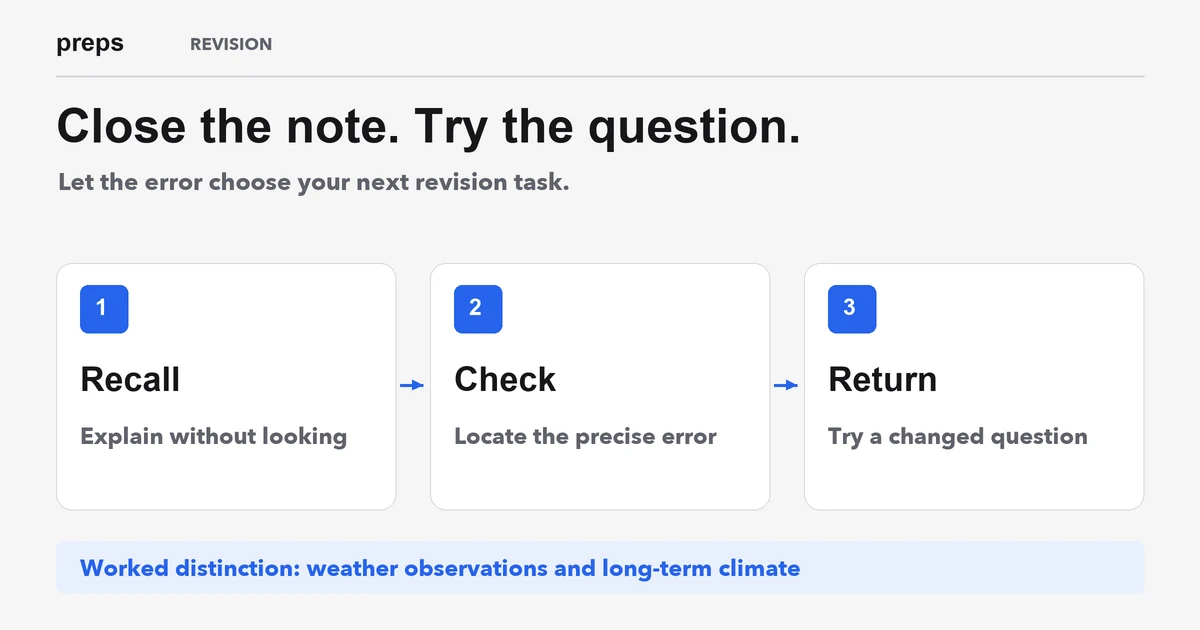
Open a set of notes you made a few weeks ago. Choose one heading and try to explain it without reading the paragraph underneath.
If you can only recognise the words when you uncover them, I'd change what the note asks you to do. If you can't understand your own abbreviations, I'd put some words back. A shorter notebook isn't automatically a more useful one.
The purpose of making notes for UPSC is to leave yourself material you can find, understand, check and use again. That may mean a small comparison, a question beside a passage, or a reference to a page you don't need to copy. It doesn't require rebuilding every book in your handwriting.
Watch what disappears when you shorten a note
Consider this deliberately faulty note, invented for this article:
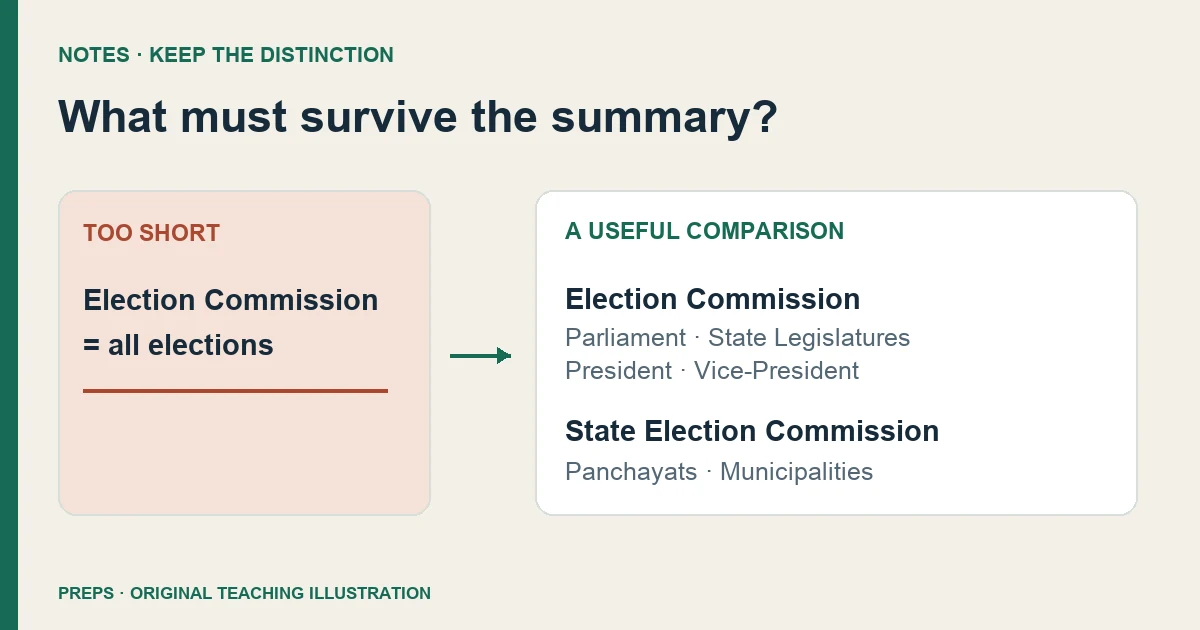
Election Commission → all elections in India.
It is beautifully short. It also makes a claim the source doesn't support.
Article 324(1) of the Constitution assigns the Election Commission responsibility for electoral rolls and elections to Parliament, State Legislatures, and the offices of President and Vice-President. Articles 243K and 243ZA separately place Panchayat and municipal elections with the State Election Commission. In the linked edition, dated 1 May 2024, see printed pages 186, 124 and 133 respectively.
For the particular confusion in our invented note, I'd keep this:
| Institution | Elections covered by the provisions being compared |
|---|---|
| Election Commission — Article 324(1) | Parliament, State Legislatures, President and Vice-President |
| State Election Commission — Articles 243K and 243ZA | Panchayats and Municipalities |
Then I'd add one question: Does an election to a State Legislative Assembly belong in the first row or the second? It belongs in the first. The word “State” alone doesn't identify the responsible commission.
That question and table are an original study aid, not a UPSC question or a complete account of election law. We haven't covered composition, appointment, safeguards or every related provision. Keep the source link so that this small note doesn't quietly become your entire chapter.
The useful compression preserves the distinction. The faulty version removes it. Count that difference before counting pages.
Give each addition a reason to stay
Before writing a fresh page, look at the syllabus, a relevant past question and your existing material. What is missing that you actually need to explain, distinguish or retrieve?
If your book already states a definition clearly, a page reference and a question may be enough. If you repeatedly confuse two institutions, the comparison deserves space. If a Mains answer needs an example, keep the example together with the point it supports and its source. A loose quotation with no connection to an argument becomes another thing to memorise.
I wouldn't turn this into a rule that you may write nothing during a first reading. Sometimes a term needs explaining immediately. Sometimes a rough diagram helps you work out the relationship. Keep those working notes. Just distinguish them from the material you're preparing for later revision; you can discard an unsuccessful explanation after resolving it.
And don't require a perfect set of notes before beginning questions. In the election example, the short question exposed what the first note had lost. Waiting until the whole polity notebook looked finished would have delayed that discovery. Equally, if you haven't understood the provision, copying more model answers won't supply that understanding. Return to the source or seek a specific explanation.
Keep updates beside the thing they change
Suppose a later report changes a figure in a note. Keep the figure's period, unit, source and relevant scope together. Record what the newer figure replaces. Two percentages referring to different populations or years aren't interchangeable simply because one appeared in today's newspaper.
For a legal or policy change, distinguish what has been proposed, enacted and brought into operation. Don't overwrite the old rule merely because a headline describes a proposal. Where you haven't established the status, leave the point unresolved in your working material and check the authoritative document before relying on it.
This is where an organised source reference earns its space. An abbreviation you can decode is useful; an unsupported claim you can no longer trace is a problem.
For choosing which news deserves a note in the first place, use the separate newspaper-selection guide. Here the decision comes later: once you've selected something, what must survive when you condense it?
Choose paper or digital by the work you need to do
Digital notes make editing and searching convenient. Paper may suit the way you read and annotate. Neither format saves you from collecting too much, and neither proves that you can produce a handwritten answer under the paper's conditions.
Try the same small topic in your preferred format. Can you locate the point, read it comfortably, amend it and trace its source? Can you explain the distinction with the note closed? Use those observations to decide what to keep. You don't need to migrate your entire preparation because somebody else's screenshots look orderly.
If you use both formats, decide where the current version lives. For example, keep the source reference and updated comparison in one digital note, with a paper practice answer pointing to it. Avoid maintaining three competing “final” versions. Future you has quite enough constitutional bodies to distinguish without also investigating which PDF was final-final.
Test a page before redesigning the whole system
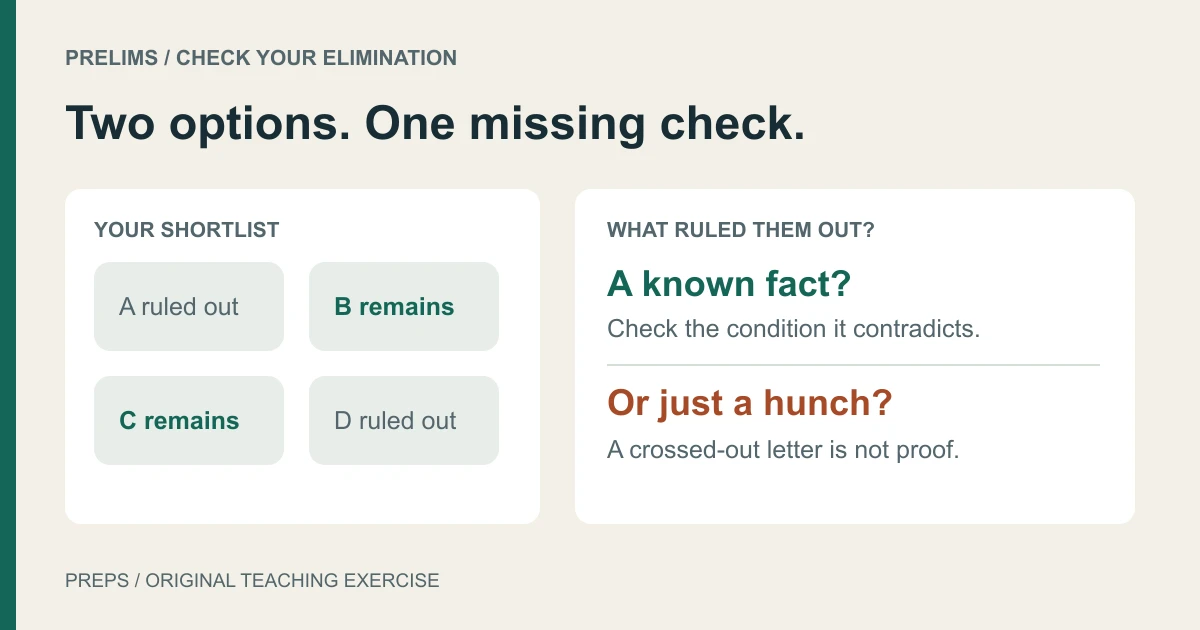
Return to the election note on another occasion. Answer the question without opening the table, then explain why the tempting alternative is wrong. Check against the source afterwards. If you still confuse the institutions, revise the explanation or question rather than making the heading brighter.
For Mains material, attempt an outline that uses the note to answer a particular question. Notice whether it supplies relevant reasoning or merely facts near the topic. The worked answer revision shows that difference in a full example.
I'd improve a handful of pages this way before replacing a whole notebook. Keep the changes that make a real task easier. A note has earned its place when you can use it accurately, including the condition that would have been easiest to delete.