Still comparing UPSC booklists? Let’s get you started with one topic.
Updated

If you've spent an evening comparing booklists and still don't know what to study tomorrow, I'd close the booklist tabs for now. Choose one small topic from the syllabus, read it from one source, and try a few questions on it. You'll have something more useful to plan around: a piece of work you've actually done.
You don't need a perfect timetable before that first session. You do need to find out what happens between “I understood the chapter” and “I can answer a question about it.” That's where I'd begin your UPSC preparation.
Make the first topic smaller than a subject
“Finish geography” gives you no sensible stopping point for tomorrow. “Understand ocean currents” gives you a topic you can read, explain and test. In polity, you might begin with the Preamble. The point is to choose a unit you can return to without reopening an entire subject.
Spend a little time with the UPSC syllabus before choosing. Then look at a few previous-year questions, or PYQs, on that area. You aren't expected to solve everything before you've studied it. You're looking at the kind of work the examination asks you to do: distinguish between statements, apply an idea, explain a relationship.
If a question looks unfamiliar, keep it beside your reading. It can give a chapter a purpose beyond reaching the last page.
For your first unit, use a textbook or other suitable source you already have and can understand. I'd add a second source only when you can name what the first one hasn't explained. A missing diagram is a reason. A stranger's claim that your booklist is incomplete needs a little more examination. Your browser can accommodate an impressive preparation plan; your evening has rather less capacity.
Read, close the book, then try
After reading the relevant section, close it. Explain the idea in a few sentences or draw the diagram from memory. Check what you left out before moving to questions.
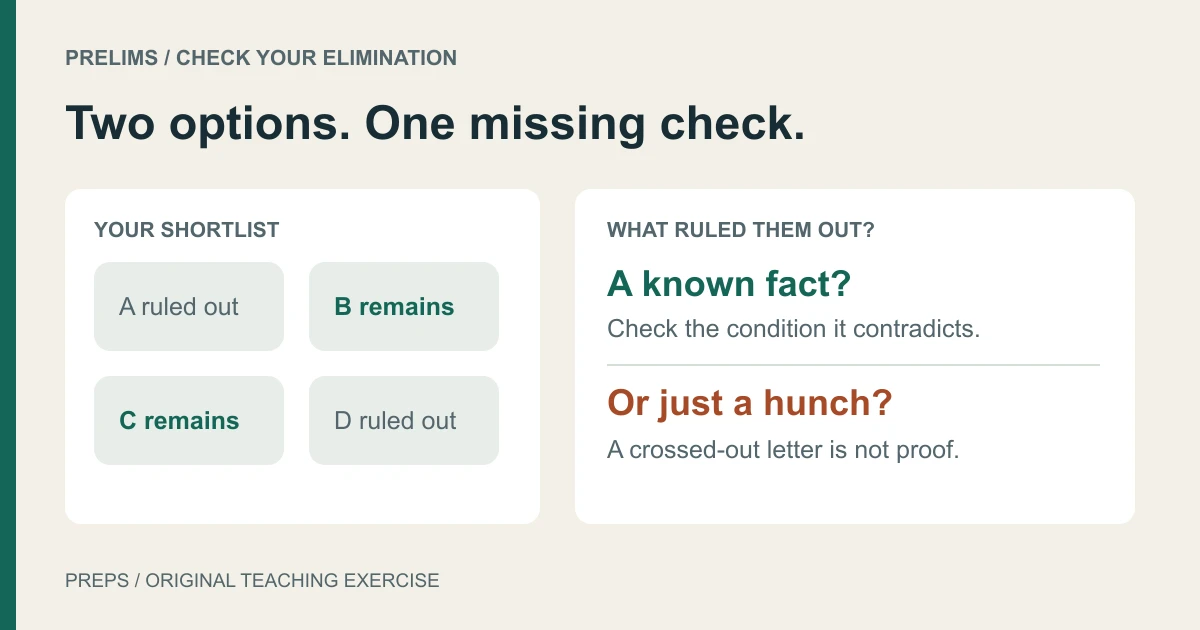
When you attempt a question, write down why you chose the option before opening the explanation. “I recognised that term” and “I could rule out the other statements” are different kinds of reasoning, even when they lead to the same choice.
Here's an original illustration of a study note after a hypothetical ocean-currents session, not a PYQ or a real learner's record:
I picked the option because one current's name looked familiar. I couldn't explain the rest of the statement. I'll return to the diagram in my reading source, draw it with the book closed, and check the labels and explanation. Then I'll try another question on the same idea.
That's enough detail to guide another session. “Revise geography” would leave you deciding where to start all over again.
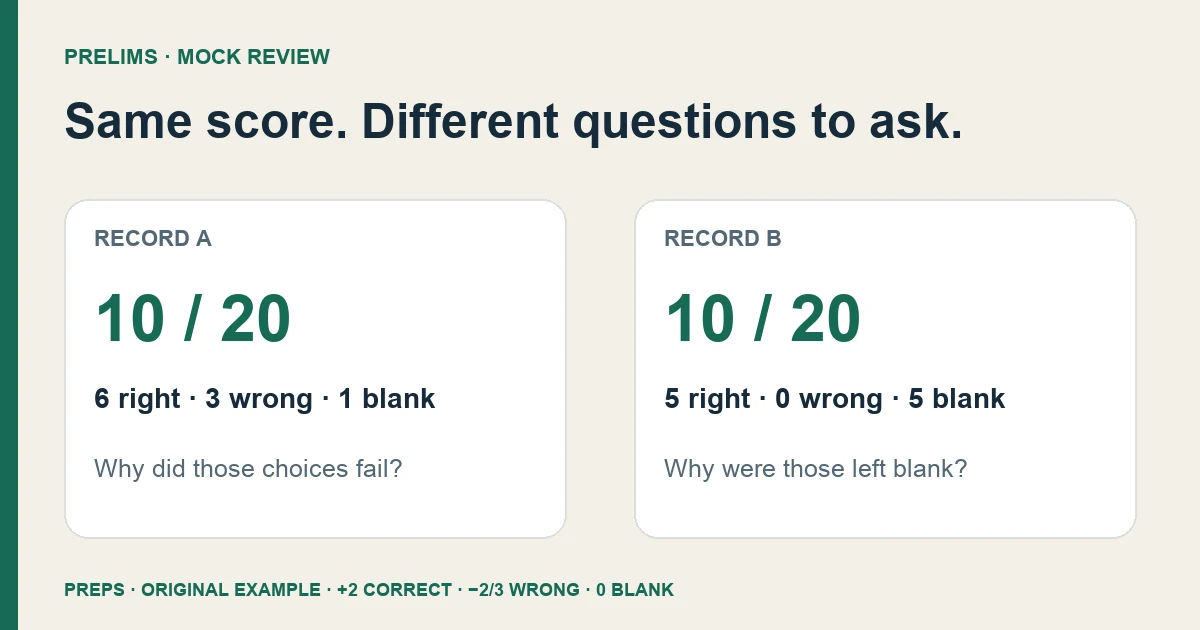
A wrong answer doesn't always call for more reading. You might have missed a condition in the question, confused two terms, or guessed without noticing. Find the particular gap before assigning yourself another chapter. And inspect correct answers too: a lucky choice is worth recognising while you still remember how you made it.
If you want a starting unit with references and practice links, use the ocean currents guide, or choose a different unit from the subject and topic guides.
Fit the cycle around the time you actually have
I'd spread that work across your first few study sessions, leaving time to come back to it. If a written plan helps you begin, use this one:
| Session | What to work on |
|---|---|
| 1 | Browse the syllabus and a few past questions; choose one small topic |
| 2 | Read its relevant section and explain the main idea with the source closed |
| 3 | Attempt a few questions, recording your reasoning |
| 4 | Check the answers and return to the source for the gaps you've found |
| 5 | Revisit the topic without looking at your earlier notes |
| 6 | Try some CSAT work and outline a Mains answer |
| 7 | Review what took time, what remains unclear and what you'll study next |
These are suggested sessions, not seven compulsory days. If work or college leaves you with shorter stretches, split a session. If the explanation still doesn't make sense, spend another session on it. You haven't fallen behind a timetable I just invented for this article.
After one cycle, you'll have a better basis for allocating time. Perhaps reading was quick but checking questions took longer than expected. Perhaps your planned evening session was never reliably available. Use that information when making the next plan; don't keep a schedule that depends on a version of your day you don't have.
Don't let the first topic become the whole preparation
A small beginning is useful because it gets you working. It also has limits. One General Studies topic won't tell you whether your CSAT needs sustained attention, which optional subject suits you, or how comfortably you can write an answer.
Give those questions a place in the plan rather than waiting until you feel ready for them.
Try CSAT early. Check General Studies Paper II's scope and attempt some work from an official past paper. Record where you got stuck: understanding a passage, choosing a method, completing a calculation or managing time. A small sample is a starting diagnosis; it doesn't establish readiness for the paper.
Write something for Mains. Choose a question on material you've studied from the public Mains question archive. Start by identifying what it asks, then make an outline. You can use your notes for that first attempt if recall is stopping you from beginning. Later, practise recall and timing deliberately. Our worked answer-writing revision shows how to examine an answer once you have one on the page.
Keep current affairs bounded. Choose a regular reading slot and connect an issue to the syllabus before making extensive notes. Keep a source and date for any figure or policy claim you may use. If you can't explain the connection yet, put the item aside for checking. Copying the whole article won't resolve that question.
Set aside time to inspect optional-subject syllabuses and past papers too. I wouldn't use your experience of one General Studies chapter as a verdict on an optional.
Check the exam year before committing to it
Alongside those first sessions, verify the examination you're planning to take. Check the relevant notification for age, attempts and qualifications, and use the official UPSC calendar directory for your target cycle. Recheck later notices for changes. Don't carry a date-of-birth window or deadline forward from an older notification.
Keep this separate from the study experiment. You can learn how to study a topic while an eligibility detail needs checking, but you shouldn't build a year-long commitment around an assumption you haven't verified.
What I'd change after the first cycle
Look at the work you've kept. If you can explain the concept but struggle with questions, I'd retain the source and add focused practice. If you can't explain the basic idea without copying, I'd make the unit smaller and revisit the explanation. If the same reading error keeps returning, I'd put that error beside the next set of questions so you can check for it.
If you're returning to preparation, use this to examine a weak area. A fresh notebook doesn't oblige you to restart every subject. Keep what you can still explain and apply; spend the time where the evidence of your own work points.
You can do this through self-study. Paid support may help when you can identify the job you need it to do: explain a concept you haven't understood, review your writing, or help plan work you can sustain. I'd make that decision after naming the gap. Buying help for “everything” makes it harder to judge whether the help is working.
For tomorrow, write down the topic, the section you'll read and the questions you'll return to. Leave space underneath for the part you couldn't explain. That space will give your next session somewhere to begin.